October is the month the house changes direction. The heat comes on for real, the outdoor water has to come off, and the leaves start telling you when the gutters are ready. September was the scouting month. This is the follow-through.
It is also the month with the one deadline that actually bites: the first hard freeze. In much of the country it lands somewhere between late October and late November, and a hose left on a spigot that night can split a pipe inside the wall. Everything below is sorted so the freeze-sensitive jobs get done first and nothing gets done twice. If you only have twenty minutes, skip to the short version at the bottom.
1. Start the Heat for Real
If you ran the furnace test from the September checklist, the first cold morning is a formality. If you didn't, the first cold morning is the test, so run it deliberately on a mild day instead. Put in a fresh filter (the filter guide covers sizes and which way the arrow points), switch the thermostat to heat, set it a few degrees above room temperature, and let the system run a full cycle. A dusty smell for the first few minutes is normal. A smell that lingers, a burner that lights and shuts off within a minute or two, or a room that gets no warm air means it is time to call, not wait.
- Book the tune-up today if it isn't booked. On a gas furnace the technician checks the heat exchanger, burners, and venting, which is as much about carbon monoxide as comfort. The first cold snap fills every HVAC schedule at once.
- Set the heating schedule. If the thermostat is still holding summer setpoints, program the heating schedule now. The thermostat savings breakdown covers what a setback actually saves and when it doesn't.
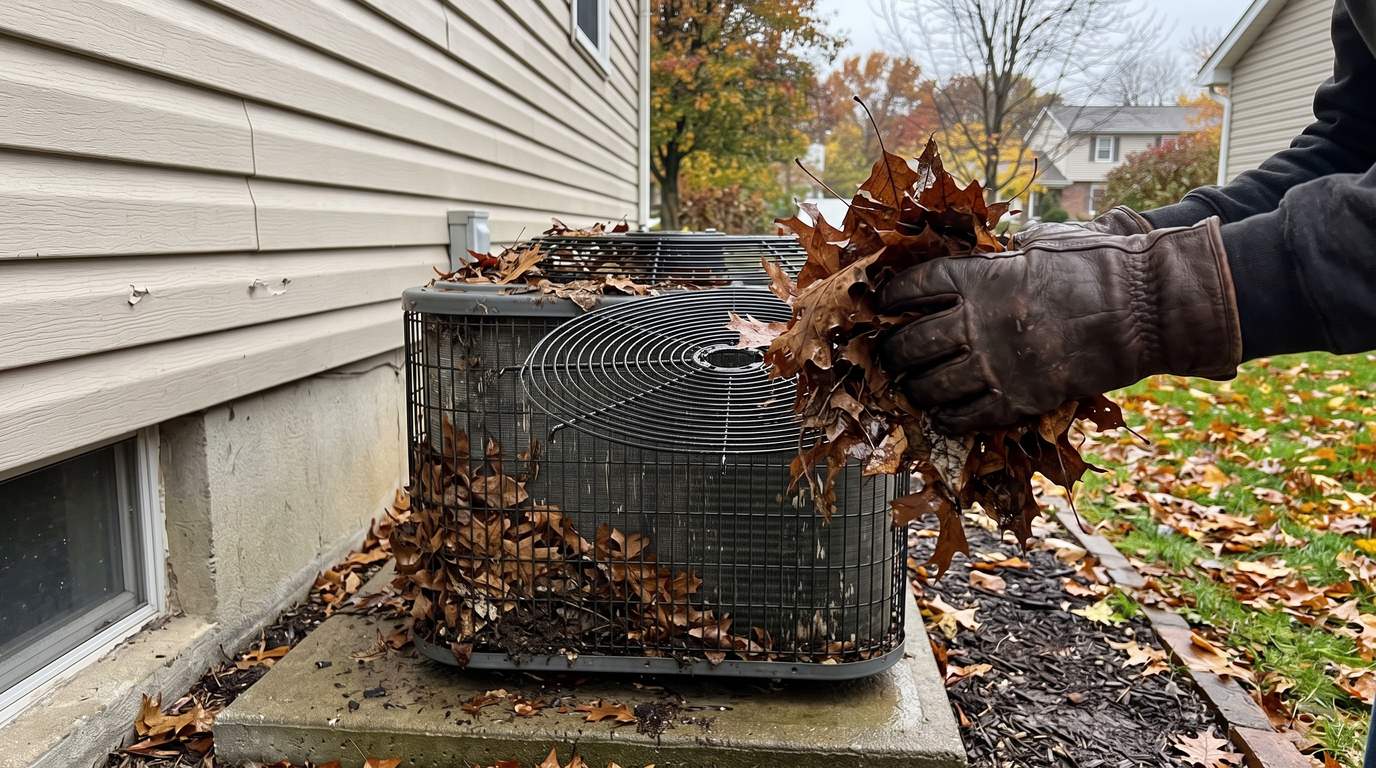
- Heat pump owners: the outdoor unit runs all winter, so keep leaves, mulch, and shrubs at least a couple of feet clear of it, and make sure it sits level on its pad so defrost water drains away.
- Clear the vents and returns that furniture migrated over during summer, and reverse ceiling fans to clockwise on low.
- Humidifier on the furnace? Fresh pad, damper open, humidistat set low to start. Condensation on the inside of windows means it is set too high.
2. Chimney and Fireplace Before the First Fire
The first cool evening that feels like a fire night is the wrong time to find out the flue has a bird nest in it. The national chimney standard (NFPA 211) calls for an inspection at least once a year, and that applies to gas fireplaces and inserts as well as wood. A year of fires leaves creosote. A year of no fires leaves nests and debris. Book a certified sweep now, because their calendars fill the same week the furnace companies' do.
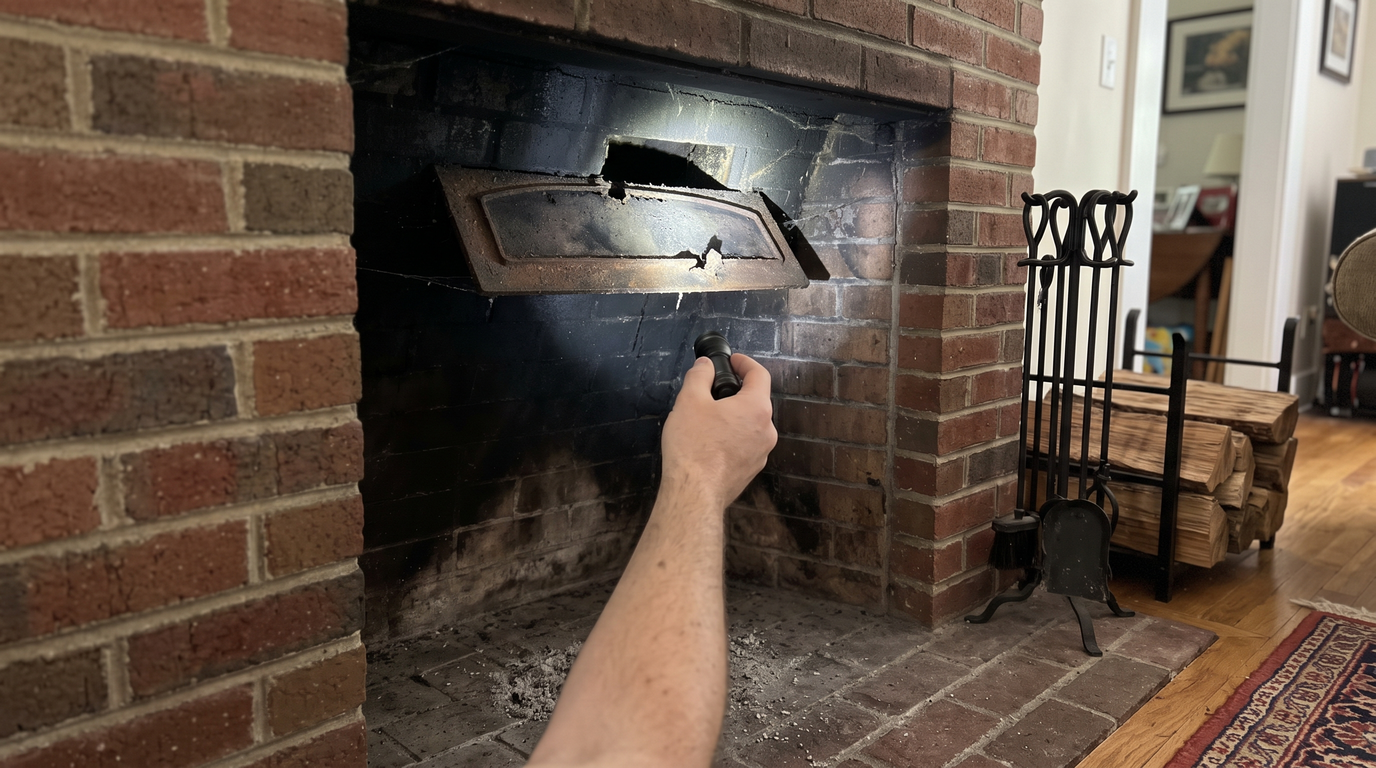
- Open and close the damper with a flashlight looking up. It should swing fully open and seal fully shut. A damper stuck partway either smokes out the room or leaks heat all winter.
- Look at the chimney cap from the ground. A missing or rusted-through cap is how animals and rain get in.
- Burn only seasoned hardwood. Split, stacked, and dried at least six months. Wet wood hisses, smokes, and builds creosote fastest.
- Get a metal ash can with a tight lid and a spot for it outside on bare ground or concrete, away from the house and the deck. Ashes stay hot for days.
- Gas fireplace: light the pilot per the manual before you need it, and check that the glass front is intact and latched.
3. Shut Down the Outdoor Water Before the First Hard Freeze
This is the job with a real deadline, and the deadline is set by the forecast, not the calendar. Watch the ten-day outlook, and when a night in the low 20s shows up, everything in this section should already be done. It takes about half an hour for a typical house.
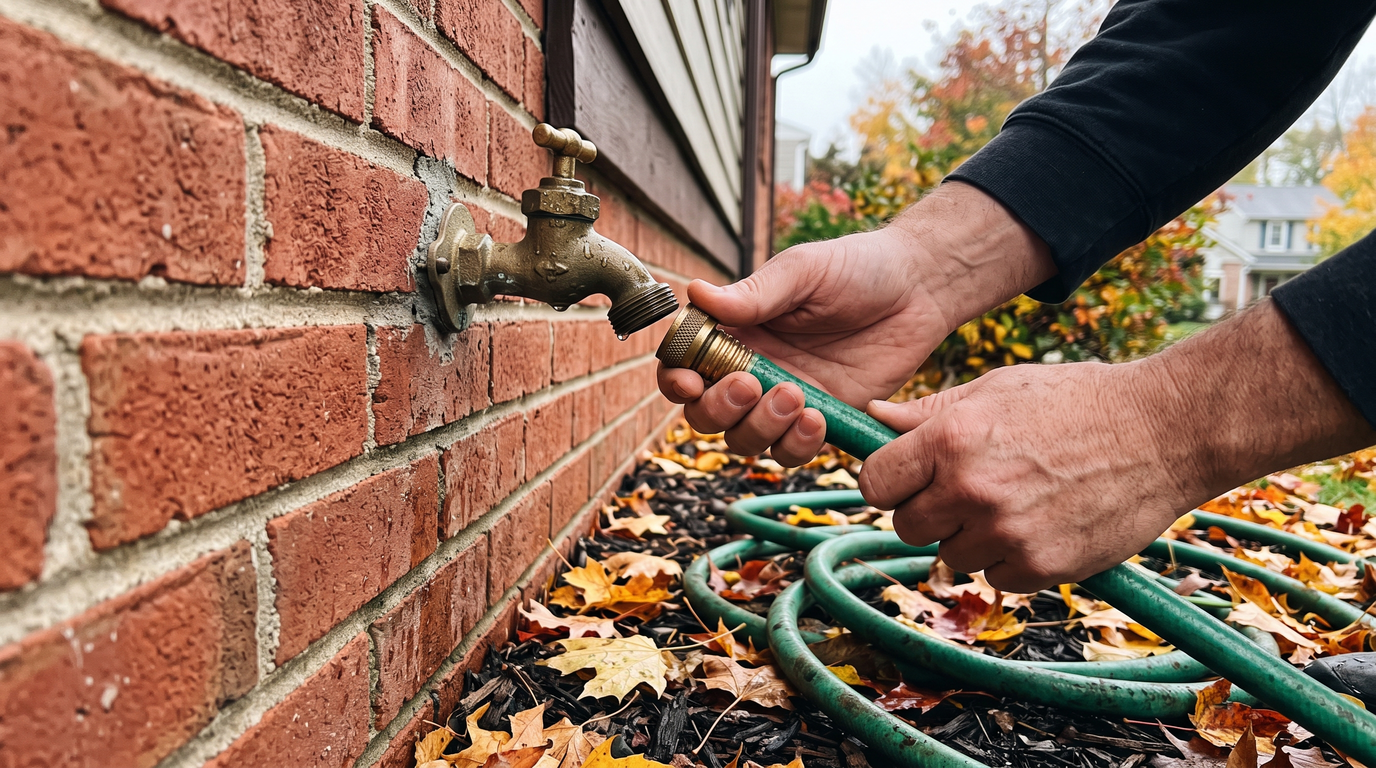
- Disconnect every garden hose. Drain it, coil it, and store it out of the sun. A hose left attached holds water in the faucet, and that is how "frost-free" spigots split: they only work if the outside section can drain.
- Close the interior shutoff for each outdoor faucet. It is usually in the basement or crawlspace, on the pipe that heads toward the exterior wall. Then go outside and open the faucet to let the line drain, and leave it open for the winter.
- No interior shutoff? An insulated faucet cover helps, but the real fix is having a plumber add a shutoff or a frost-free sillcock. The DIY vs. plumber guide covers where that line sits.
- Irrigation: shut off the backflow valves, set the controller to off or rain mode, and have the lines blown out before the first hard freeze. For most homes that is a pro job, because it takes a high-volume compressor and too much pressure can crack fittings. A full guide to winterizing irrigation and outdoor plumbing is coming later this month.
- Drain what's left outside: rain barrels, fountains, birdbaths that crack, and the pressure washer's pump if it lives in an unheated shed.
Test the spigot, not the valve
After you close an interior shutoff, open the outside faucet and watch it. A short burst of water and then nothing means the valve is holding. A steady trickle that doesn't stop means the shutoff isn't fully closing, and that pipe is still full of water heading into winter. Better to find that in October than as a wet basement wall in January. If an indoor faucet has been dripping all summer, the leaky faucet guide is an hour's fix while you're already thinking about valves.
4. Leaves, Gutters, and the Timing Question
October is when leaf drop starts in earnest, which makes it tempting to clean the gutters now. For most yards, that means cleaning them twice. The gutter cleaning guide covers the whole job, ladder setup included, and its timing rule holds: plan a light pass if the early trees fill things up, and do the real clean after the last big drop. What October is for is keeping leaves from causing problems in the meantime:
- Mulch leaves into the lawn with the mower while you can still see grass through them. Rake only when they form a solid mat. The fall lawn care guide explains why the mulched leaves help.
- Keep leaves out of the places water needs to go: storm drains at the curb, window wells, area drains, and the top of the heat pump.
- Watch the downspouts during a heavy rain. Water spilling over a gutter edge or a downspout that stays dry points to a clog you can clear before the big clean.
- Scan the roof from the ground after the first windy storm for lifted shingles and flashing pulling away at the chimney.
5. The Lawn's Last Jobs of the Year
For cool-season grass, the seeding window is mostly closed by early October, so the focus now shifts from growing new grass to protecting what's there. The full season plan is in the fall lawn care guide. The October part:
- If you seeded in September, keep the seedbed damp until the new grass has been mowed a couple of times, and hold off on weed killer until then.
- Established lawn with weeds? October is the best month for broadleaf weed control. Perennial weeds are pulling energy down into their roots and take the herbicide with them. Read the label for the temperature range.
- Keep mowing at your normal height as long as the grass keeps growing. Don't scalp the last cut.
- The winterizer feeding goes down around the time growth stops, which is late October to mid November in most cool-season areas.
- Warm-season lawns (Bermuda, zoysia, St. Augustine, centipede) are winding toward dormancy. Stop fertilizing and keep mowing until they go brown.
6. Garden Cleanup and What Still Goes in the Ground
The vegetable garden is winding down, but October is planting month for two things that ignore the usual frost math:
- Garlic: plant cloves three to six weeks before your first hard freeze and mulch heavily. The fall garden guide has the details, and the planting calendar gives your frost date by ZIP code.
- Spring bulbs: tulips, daffodils, and crocus go in once the soil has cooled, generally several weeks before the ground freezes.
- Pull diseased plants (blighted tomatoes, mildewed squash) and bag them for the trash rather than the compost pile, so the disease doesn't overwinter in the bed.
- Leave healthy perennial stems and seed heads standing if you like. They hold snow, feed birds, and shelter beneficial insects. Cut them back in spring.
- Drain and store garden hoses and sprayers, and bring ceramic pots inside or turn them upside down. Wet clay cracks when it freezes.
7. Close the Gaps and Get Storm Ready
October is usually the last month warm enough for exterior caulk to cure properly, so check the tube for its minimum application temperature and finish any exterior sealing now. The caulking guide covers technique. Inside, the dollar bill test finds bad weatherstripping: close a door or window on a bill, and if it slides out with no drag, the seal isn't sealing. The weatherstripping guide walks through every type, and the DIY energy audit shows you where the house leaks most.
Fall storms bring wind, heavy rain, and in some areas early snow, and the Atlantic hurricane season runs through November 30. A short prep round now:
- Test the sump pump by pouring a bucket of water into the pit. It should kick on, empty the pit, and shut off.
- Start the generator and run it under a small load for a few minutes. Treat the fuel with stabilizer or run it dry for storage. A generator always runs outdoors, well away from windows and doors, never in the garage.
- Cut back dead limbs over the roof, driveway, and power lines. Anything large or near a line is a job for an arborist or the utility.
- Restock the basics: flashlights, batteries, a charged power bank, and a few days of water.
- Put away or tie down patio furniture, umbrellas, and anything else that becomes a projectile in high wind. The grill and outdoor gear winterizing guide covers cushions, covers, and the propane tank, which stays outside.
Still grilling? Fall is a good season for low and slow cooking, and the smoker buying guide sorts out pellet, offset, kamado, and electric if you are shopping for next year.
8. Mark November 1 for the Detectors
Daylight saving time ends Sunday, November 1, 2026. Put the detector check on the same day you change the clocks, so it happens every year without thinking about it:
- Press the test button on every smoke and carbon monoxide alarm. NFPA recommends testing smoke alarms monthly and replacing them every 10 years from the manufacture date on the back.
- Replace batteries in any alarm with replaceable ones.
- Check CO alarm coverage: one on each level and outside each sleeping area. CO alarms often wear out before smoke alarms, so go by the replace-by date printed on the unit.
- Check the fire extinguisher gauge while you're at it. The needle should be in the green.
The heat just came on for the season, and the fireplace is about to be used. That is why the detector check belongs here and not in spring.
October at a Glance
October Maintenance Questions
When exactly should I shut off the outdoor faucets? Before the first night forecast in the low 20s, not on a date. In a mild fall that can be well into November. Most people do it in October anyway, once the last watering and car washing are done, because there is no downside to doing it early.
Is it too late to overseed in October? For cool-season grass, usually yes by mid October in most of the country, because new seedlings need roughly six weeks of growth before hard freezes. If the lawn is thin, spend October on weed control and plan the seeding for next September. The fall lawn care guide has the countback math.
Do I need a chimney inspection if I rarely use the fireplace? Yes. An unused chimney collects nests, leaves, and debris, and a blocked flue is the problem you find out about the first time you light a fire. The yearly inspection covers both kinds of trouble.
Should I clean the gutters in October or November? Whenever most of your leaves are down, which is usually two to three weeks after peak color. Early trees might justify a light pass in October. The one that matters is the last one before the freeze.
The 20-Minute Version
Only have 20 minutes? Three things: disconnect the hoses and close the interior shutoffs to the outdoor faucets, put a fresh filter in the furnace and let it run, and make the two phone calls if they aren't made yet: the furnace tune-up and the chimney sweep. That covers the burst pipe, the no-heat night, and the first fire in a flue nobody has looked at. The lawn, the garden, and the gutters each want their own Saturday, and they have their own guides.
For the whole season on one page, the fall home maintenance checklist sorts every job by deadline and has a free printable. If this is your first fall in the house, the free worksheet pack from the First-Time Homeowner's Handbook includes a maintenance log for writing down what you did and when. November picks up from here: the last gutter clean, the mower put away, and the house settled in for winter.