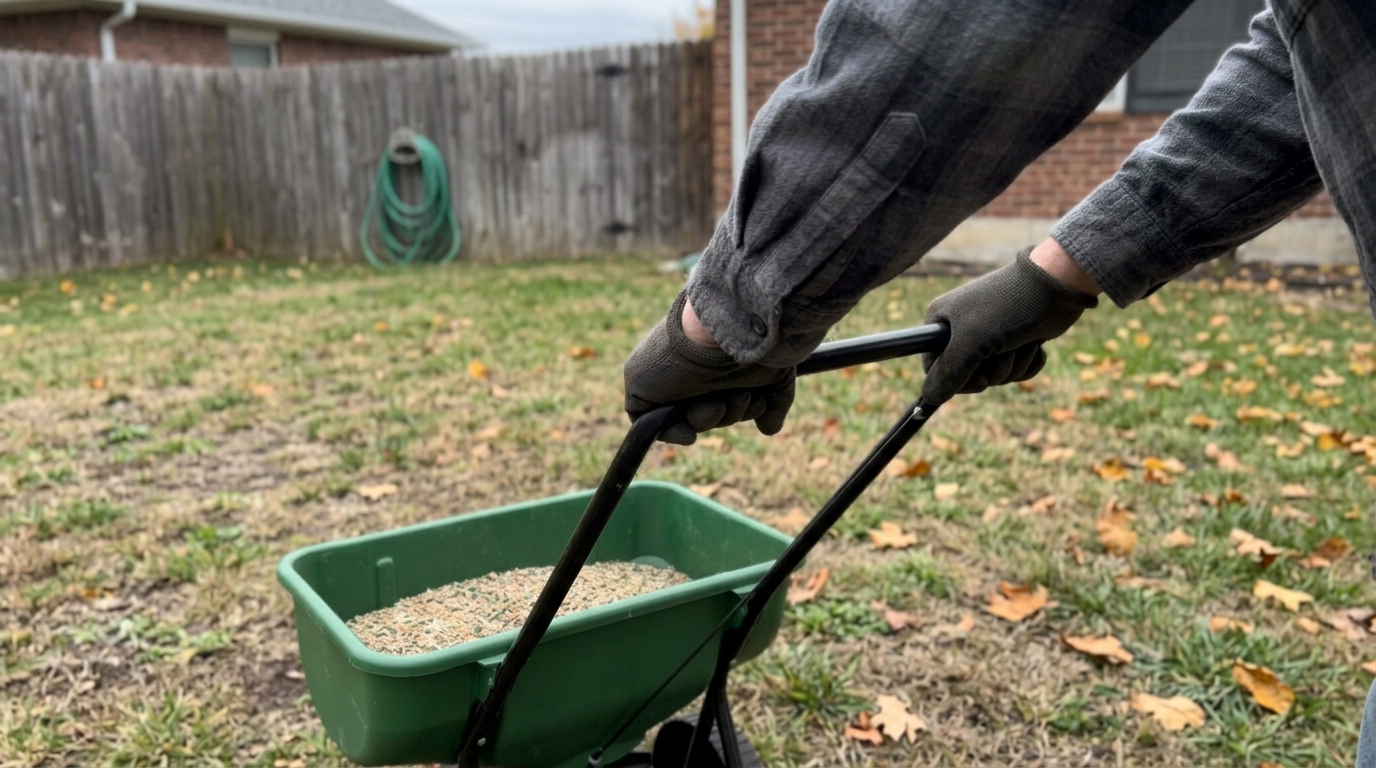
Everything the lawn industry sells you in spring — the seed, the hope, the four-step programs — works about twice as well in fall, for reasons that have nothing to do with marketing and everything to do with what grass actually is. Cool-season grasses (the fescues, ryegrasses, and bluegrass that carpet most northern and transition-zone yards) do their real growing in exactly this weather: warm soil left over from summer, cool air, reliable rain, and — this is the big one — no crabgrass competing for the open ground.
So here's the honest framing: spring lawn care is triage; fall lawn care is construction. A seed put down in September germinates in warm soil, roots all fall, sleeps through winter, and wakes up in April as established grass. That same seed put down in April germinates into an immediate war with crabgrass, followed by a July heat wave, on roots ten weeks old. The six weeks after Labor Day decide what the yard looks like next June. Miss them and you'll be buying the spring program again.
Step 1
Aerate — but only if the lawn actually needs it
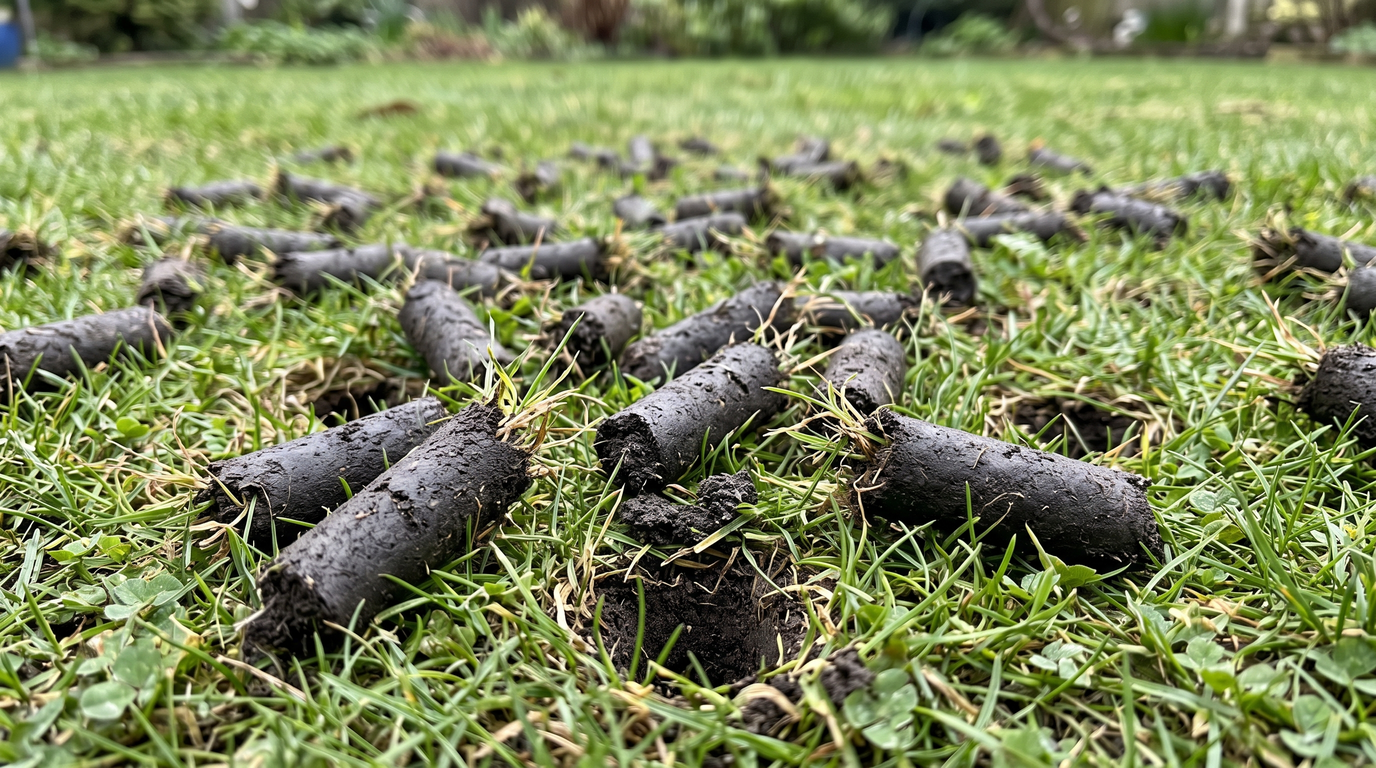
Core aeration — the machine that pulls finger-sized plugs of soil out of the lawn — fixes compaction, and compaction is a where-you-walk problem. The path the dog patrols, the strip where the mower turns, the goal-mouth of the soccer net: if a screwdriver won't slide into damp soil there without a fight, that ground needs air. A lawn that's soft underfoot and thriving mostly doesn't, and the annual-aeration-for-everyone pitch is how lawn companies smooth out their fall schedule.
If you're aerating, early fall is the right time for cool-season lawns — roots are in their growth sprint and fill the holes with new growth instead of weeds. Rent the core machine with a neighbor (it's a two-person tool to lift anyway, and splitting the day halves the cost), water the lawn the day before so the tines bite, and make two passes in different directions on the worst areas. Leave the plugs where they fall; they crumble back in within a couple of weeks and that's free topdressing. Spike shoes and roller-spikers punch holes without removing soil — which compacts the hole walls and does roughly nothing. Cores or don't bother.
Step 2
Overseed into the gap crabgrass left open
The math on fall seeding is simple: count back 45 to 60 days from your area's first frost date, and that's your seeding deadline — the new grass needs about six weeks of growth before hard freezes. For most cool-season country that means the window is open right now and starts closing by early October. (Your ZIP's frost date is in the planting calendar — same date, different job.)
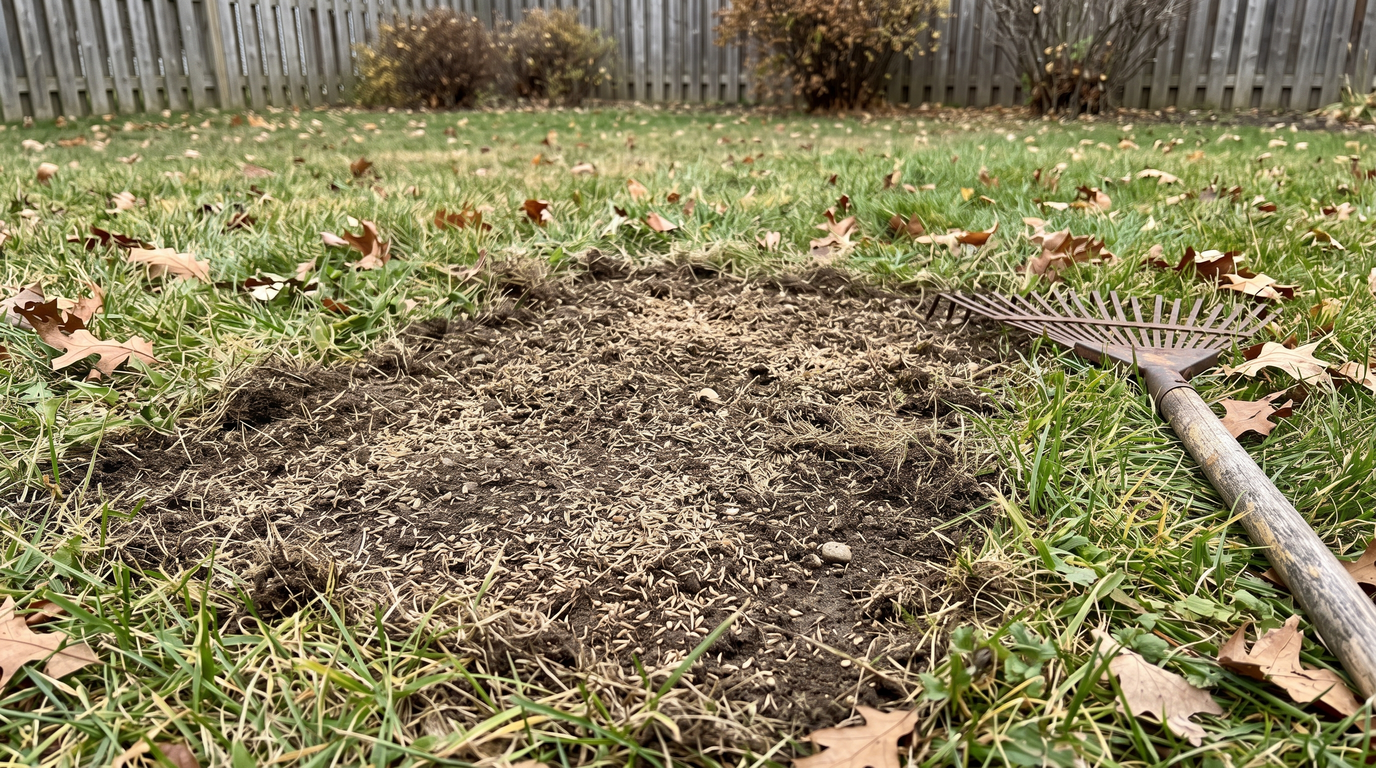
The technique matters more than the seed brand: seed has to touch soil. Seed sitting on thatch or matted grass germinates and dies in place. Mow shorter than usual (around 2 inches), rake thin patches hard enough to scuff the surface, spread the seed — a broadcast spreader for the whole lawn, by hand for patches — and rake again lightly so seed works down into contact. If you aerated first, you've already done the hard part; the holes are a thousand perfect seedbeds. Then the only rule that matters: keep the top half-inch damp until germination, which means a light watering daily (twice on warm days) for two to three weeks. The classic fall seeding failure isn't the seed — it's the two dry days in week two that nobody noticed.
Buy seed like it matters, because it does
The bag's fine print beats the bag's marketing. Look for a named blend matched to your sun (a "sun & shade" fescue blend covers most yards), 0.0% weed seed, and a test date within the year. The cheap builder's-mix bags pad the weight with annual ryegrass — it sprouts fast, looks great for eight months, and dies, which is how a lawn ends up thin again by next fall.
Step 3
The September feeding — the one that actually counts
If a cool-season lawn gets exactly one bag of fertilizer a year, it should be this one. Fed in early-to-mid September, grass puts nitrogen into root mass and energy reserves instead of surge growth — it's the feeding that thickens the lawn, not the one that just makes you mow more. Any straight lawn fertilizer at the bag's normal rate is fine; skip "weed and feed" right now if you seeded, because its herbicide can't tell a weed seedling from your new grass. Water it in, and don't overthink the brand — nitrogen is nitrogen; timing is the product.
The one conflict to respect
Seed and broadleaf weed killer don't share a calendar. If you overseeded, wait until the new grass has been mowed two or three times (usually 4–6 weeks) before any herbicide touches it. If the lawn is weedy enough that killing weeds matters more than seeding this year — do that instead: October is the single best month for broadleaf control, because perennial weeds are pulling everything down into their roots and take the herbicide with them. Seed thick next fall.
Step 4
Leaves: mulch, don't fight
The great October leaf war is mostly optional. A light-to-moderate leaf covering doesn't need raking — it needs mowing. Run the mower (bag off, or better, a mulching blade) over dry leaves and the confetti disappears down into the turf, where it breaks down over winter into exactly the organic matter you'd otherwise buy in bags. University turf programs have run this experiment for years: mulched leaves at reasonable volumes don't harm the lawn and modestly feed it.
The exception is a full blanket — wet, matted layers that block light entirely, which smother grass and invite snow mold. That's when the rake earns its keep, and the haul makes great compost or free mulch for beds. The working rule: if you can see grass through the leaves, mow them; if you can't, move them.
Step 5
Putting it to bed
Keep mowing as long as the grass keeps growing — at the same 2.5-to-3-inch height as always — and resist the folk wisdom about scalping the last cut short. A final cut on the lower end of normal is fine to reduce snow-mold matting; a scalped lawn heads into winter with its food-making surface removed. Water only if fall turns genuinely dry (the lawn still wants about an inch a week until dormancy), and around the time growth stops — late October to mid-November for most cool-season areas — put down the winterizer feeding. That late shot of nitrogen doesn't push blade growth in the cold; it banks energy that becomes the early green-up next spring, and it's the second-most-valuable bag of the year after September's.
Two housekeeping notes while you're out there: this is the season to run the mower dry or stabilize its fuel before storage, and if you have irrigation, get it blown out before the first hard freeze — a cracked manifold in April costs more than the whole fall program. Both jobs are on the fall checklist along with the gutters and the rest of the wind-down.
The warm-season footnote
Everything above is the cool-season playbook. If your lawn is Bermuda, zoysia, centipede, or St. Augustine — the southern grasses that brown out at the first frost no matter what you do — the calendar flips: their big feeding-and-seeding season was early summer, and the fall job is mostly to stop fertilizing (a September feeding pushes tender growth into frost), keep mowing until dormancy, and handle winter weeds. The one shared item is October broadleaf control; dormant warm-season lawns make weeds easy to spot and easy to hit.
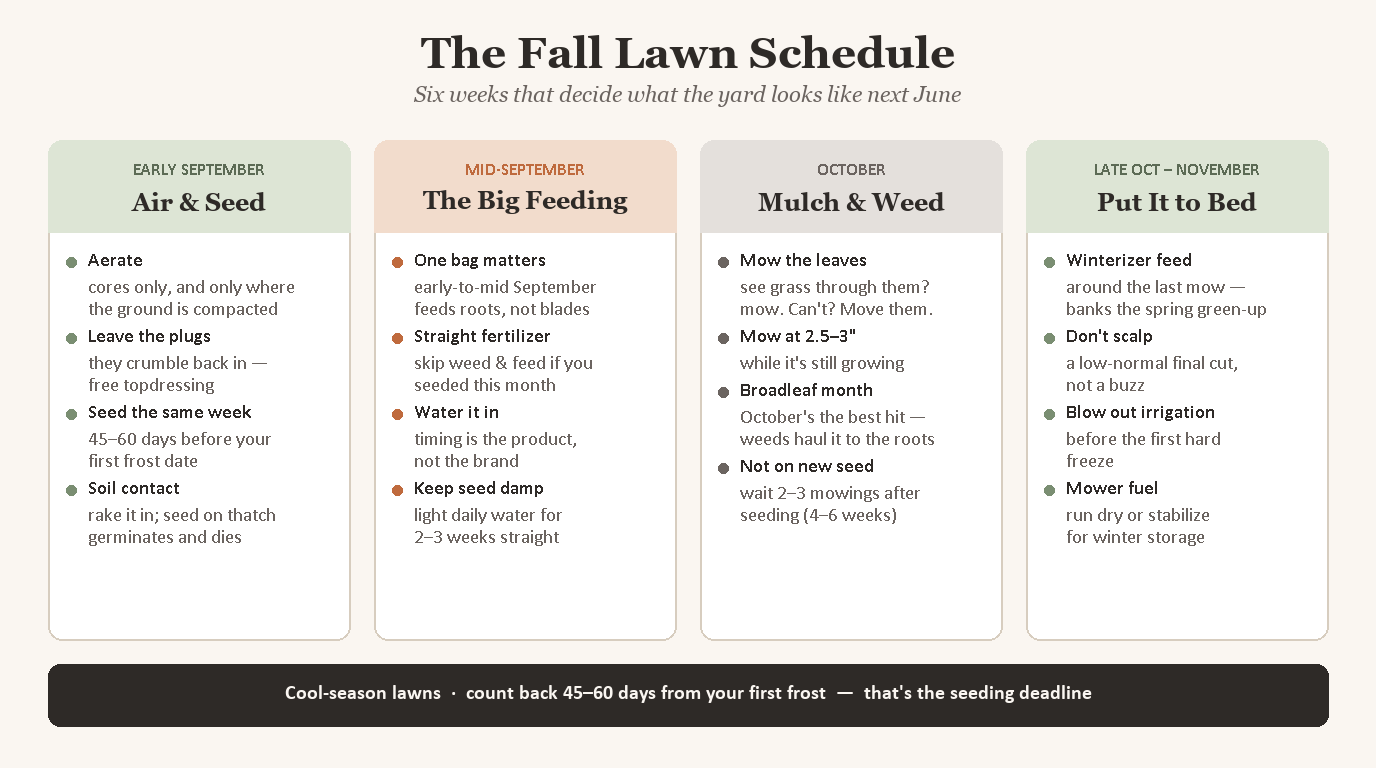
The whole season on one card
That's the fall program: air, seed, feed, mulch, and a good-night feeding — most of it front-loaded into the next six weeks, none of it complicated, all of it compounding quietly until April makes it look like you know something the neighbors don't.
The rest of the yard's wind-down is on the same clock: the deck staining weekend wants the same dry September window as your grass seed, the September checklist carries the whole month's list, and when the leaves you didn't mulch start heading for the gutters — that guide is next.