Every spring, I walk out into my yard for the first time after the snow melts and have the same reaction: "Well, that looks terrible." Brown patches everywhere, matted-down grass, random bare spots, and what appears to be an entire ecosystem of weeds already getting a head start. If your lawn looks like a disaster right now, you're not alone — and it's totally fixable.
The good news is that lawns are remarkably resilient. With the right work done at the right time over a few weekends, you can take a yard that looks abandoned and turn it into something you're actually proud of by early summer. The key is not doing everything at once and not jumping the gun before your lawn is ready.
I've learned most of this through trial and error — including the year I put down fertilizer way too early and basically burned half my front yard. So let me save you from my mistakes and walk you through exactly what to do, when to do it, and what you can honestly skip.
Don't Rush It — Timing Actually Matters
This is the number one mistake I see homeowners make with spring lawn care, and I made it myself for years. You get that first warm weekend in late February or early March and you want to get out there and start fixing things. Resist that urge.
Your lawn needs the soil temperature to consistently hit about 55 degrees Fahrenheit before it really starts actively growing. Before that, the grass is still mostly dormant and anything you put on it — fertilizer, weed killer, seed — is mostly wasted money. Depending on where you live, that's usually sometime in March through April. If you're in Pennsylvania like me, I typically don't start doing serious lawn work until mid-March at the earliest.
A cheap soil thermometer from the hardware store takes all the guesswork out of this. Stick it in the ground a couple inches deep in a few spots around your yard. When it's consistently reading 55 or above for a week, you're good to go.
Step One: Clean Up the Mess
Before you do anything else, get out there and rake. I know, raking isn't anyone's idea of a good time. But your lawn has been sitting under leaves, sticks, dead grass, and whatever else blew in over the winter, and all that debris is suffocating it. The grass underneath needs sunlight and air circulation to wake up and start growing.
Use a good leaf rake (not a garden rake — you'll tear up the turf) and go over the whole yard. You're not trying to dig into the soil. You're just clearing the surface and fluffing up any matted areas where the grass got pressed flat under snow or ice. This alone makes a surprising difference in how quickly your lawn greens up.
While you're at it, pick up any sticks, rocks, or debris that might have appeared over the winter. Walk the whole yard and check for any spots where animals dug, where ice caused damage, or where foot traffic wore paths. Just getting a clear picture of what you're working with is half the battle.
Deal with Bare Spots and Thin Areas
Unless you have some sort of magical lawn, you're going to have bare patches and thin areas after winter. Dogs, foot traffic, ice damage, grubs — there are a dozen reasons your grass might have died off in spots. Early spring is the perfect time to fix them.
For small bare spots, the process is really simple. Rough up the soil with a garden rake so it's loose on top, spread grass seed over the area (use a seed that matches your existing lawn type if you can), press it down gently with your foot or the back of the rake, and keep it moist until it germinates. That's it. Most grass seed germinates in seven to fourteen days if the soil is warm enough and it stays consistently damp.
For larger areas or a generally thin lawn, overseeding is the way to go. This just means spreading seed across your entire lawn, not just the bare spots. The new seed fills in between existing grass plants and thickens everything up. A broadcast spreader makes this easy — you can get a decent one for around thirty bucks, and you'll use it for fertilizer too so it's a good investment.
One important note: if you're planning to use a pre-emergent weed killer (more on that in a minute), you can't overseed at the same time. Pre-emergent prevents seeds from germinating, and it doesn't know the difference between grass seed and weed seed. You need to pick one or the other, or do them about six to eight weeks apart.
The Fertilizer Question
Every lawn care company in the world wants to sell you a spring fertilizer program. Here's what they don't always tell you: your lawn probably doesn't need as much fertilizer as you think, and applying it at the wrong time does more harm than good.
If you're going to fertilize in spring — and for most lawns, one light application is a good idea — wait until the grass is actively growing. That means it's been mowed at least once or twice already. For most of us, that's sometime in April or early May. Putting fertilizer down before the grass can use it just feeds the weeds that are already awake.
When you do fertilize, use a slow-release formula rather than a quick-release one. Slow-release feeds your lawn steadily over several weeks instead of dumping a bunch of nitrogen all at once. It's gentler on the grass, better for the environment, and honestly produces better results. Follow the rates on the bag exactly — more is absolutely not better. That's how you end up with burned grass, which I can tell you from personal experience is incredibly frustrating to fix.
If you've never done a soil test, spring is a great time to do one. Your local extension office will test your soil for cheap (often free), and the results will tell you exactly what your lawn needs instead of guessing. Maybe your soil is low on potassium. Maybe the pH is off. A soil test takes the guesswork out of fertilizing and can save you money on products you don't actually need.
Weeds: The Early Bird Approach
Here's the thing about weeds that took me years to figure out: the best time to deal with them is before you can see them. Once you've got dandelions and crabgrass all over your yard, you're already playing catch-up.
A pre-emergent herbicide creates a barrier in the top layer of soil that prevents weed seeds from germinating. For crabgrass — which is the big one most people struggle with — you want to put pre-emergent down when the soil temperature hits about 55 degrees for several days in a row. There's actually an old landscaper's trick: apply it when the forsythia bushes in your neighborhood start blooming. Those yellow flowering shrubs bloom right around the same soil temperature that triggers crabgrass germination.
For weeds that are already growing (like dandelions, which are perennials and come back from their roots), you'll need a post-emergent herbicide. The selective kind targets broadleaf weeds without killing your grass. Just make sure you read the label and apply it when the weather is right — too hot and it can stress your lawn, too cold and it won't work.
Or, honestly, if you only have a few dandelions, just pull them by hand. Get one of those stand-up weed pullers so you don't destroy your back. It takes fifteen minutes and it's weirdly satisfying.
When to Start Mowing (and How)
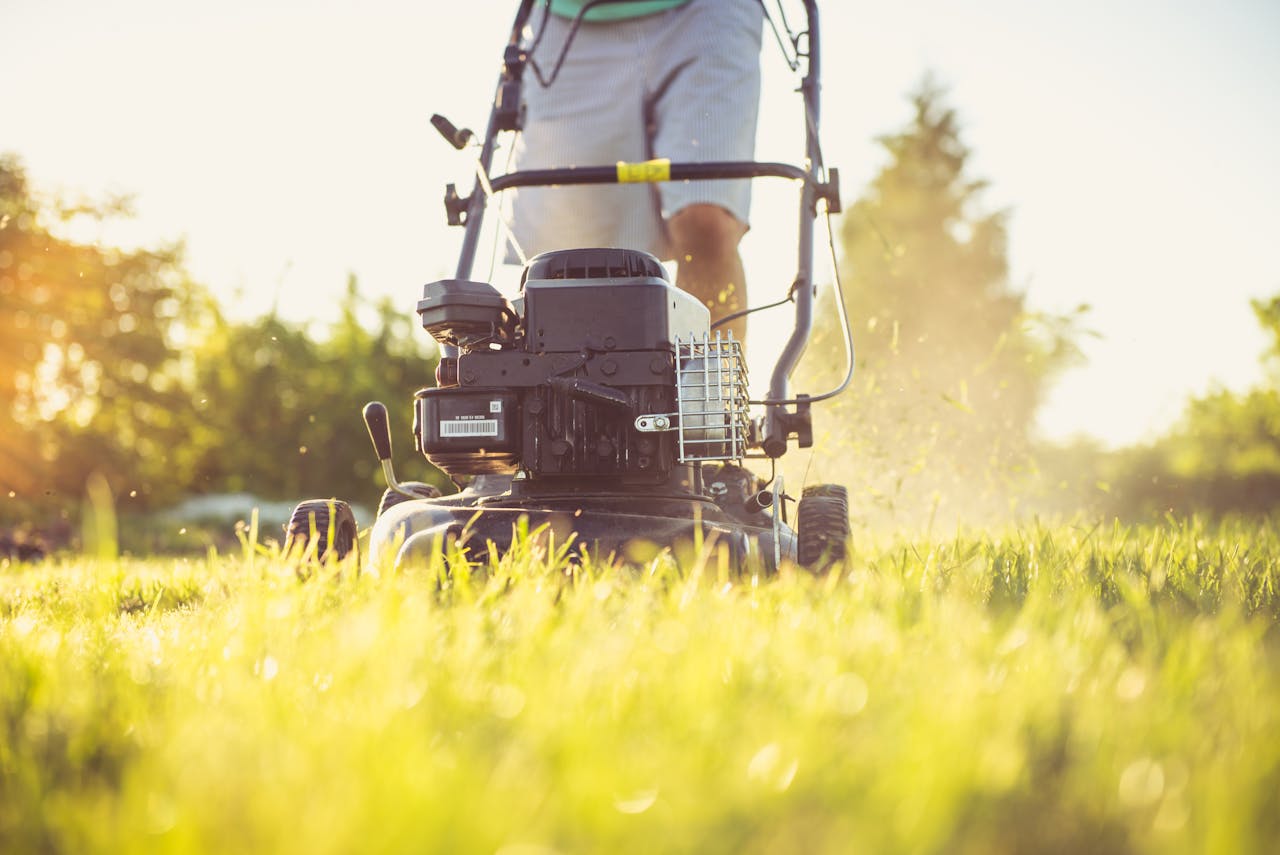
Start mowing when your grass is actively growing and reaches about three to four inches tall. For your first mow of the season, don't cut it too short. Set your mower to one of its higher settings and just take off the top third. Scalping your lawn in early spring stresses it out when it's already trying to recover from winter.
Speaking of mowing, take a few minutes to get your mower ready before that first cut. Change the oil if you didn't do it last fall, check the air filter, and most importantly — sharpen the blade. A dull mower blade tears the grass instead of cutting it cleanly, which makes your lawn look ragged and actually makes it more susceptible to disease. You can sharpen it yourself with a file or take it to a hardware store. Most places charge ten to fifteen bucks and do it while you wait.
Throughout the spring, keep your mowing height at three to three and a half inches. I know that feels tall, but taller grass shades the soil, which helps retain moisture and — here's the big one — prevents weed seeds from getting the sunlight they need to germinate. Cutting your grass short is literally helping the weeds.
Watering: Less Than You Think
In early spring, you probably don't need to water your lawn at all unless you're trying to germinate new seed. Spring rain usually provides plenty of moisture, and overwatering in cool weather can actually promote fungal diseases.
As things warm up and rain becomes less frequent, the general rule is one inch of water per week, including rainfall. The best way to measure this is to set out a few tuna cans or cat food cans around your yard when you run the sprinkler. When they have an inch of water in them, you're done. It sounds low-tech, but it works perfectly.
Water deeply and less often rather than a little bit every day. Deep watering encourages the roots to grow deeper into the soil, which makes your lawn more drought-resistant when summer heat hits. Short, frequent watering keeps the roots shallow and dependent on constant irrigation.
A Realistic Spring Lawn Care Schedule
Here's roughly how I space this out, and it keeps it from feeling overwhelming. In late winter through early March, I just do the cleanup — raking, picking up debris, and getting a look at the condition of things. Once the soil warms up in March or April, I overseed any bare spots and put down pre-emergent on the rest of the lawn (remember, not both in the same area). I start mowing when the grass hits three to four inches.
In April or May, once the grass has been mowed a couple times and is clearly growing well, I'll put down one application of slow-release fertilizer. I spot-treat any weeds that made it through the pre-emergent with a post-emergent spray. And I start adjusting the watering schedule as needed based on rainfall.
That's really it. The whole spring lawn care process is maybe four to five sessions of work spread over two months. No need to be out there every weekend stressing over it.
What You Can Skip
Let me save you some time and money. You don't need to dethatch your lawn every spring — only if you have a serious thatch buildup over half an inch thick, which most lawns don't. You don't need to aerate in spring either; fall is actually the better time for that. You don't need a complicated four-step fertilizer program from the hardware store. And you definitely don't need to hire a lawn care service for a standard suburban yard — everything I've described here is straightforward DIY work.
The lawn care industry makes a lot of money by convincing homeowners that maintaining a nice yard is complicated and requires constant professional intervention. It really isn't. A little knowledge, some basic products, and a few weekends of work will get you ninety percent of the way there.
Your lawn is tougher than you think. Give it some basic care this spring, be patient while it wakes up, and by June you'll be looking at a yard that makes the effort feel completely worth it.