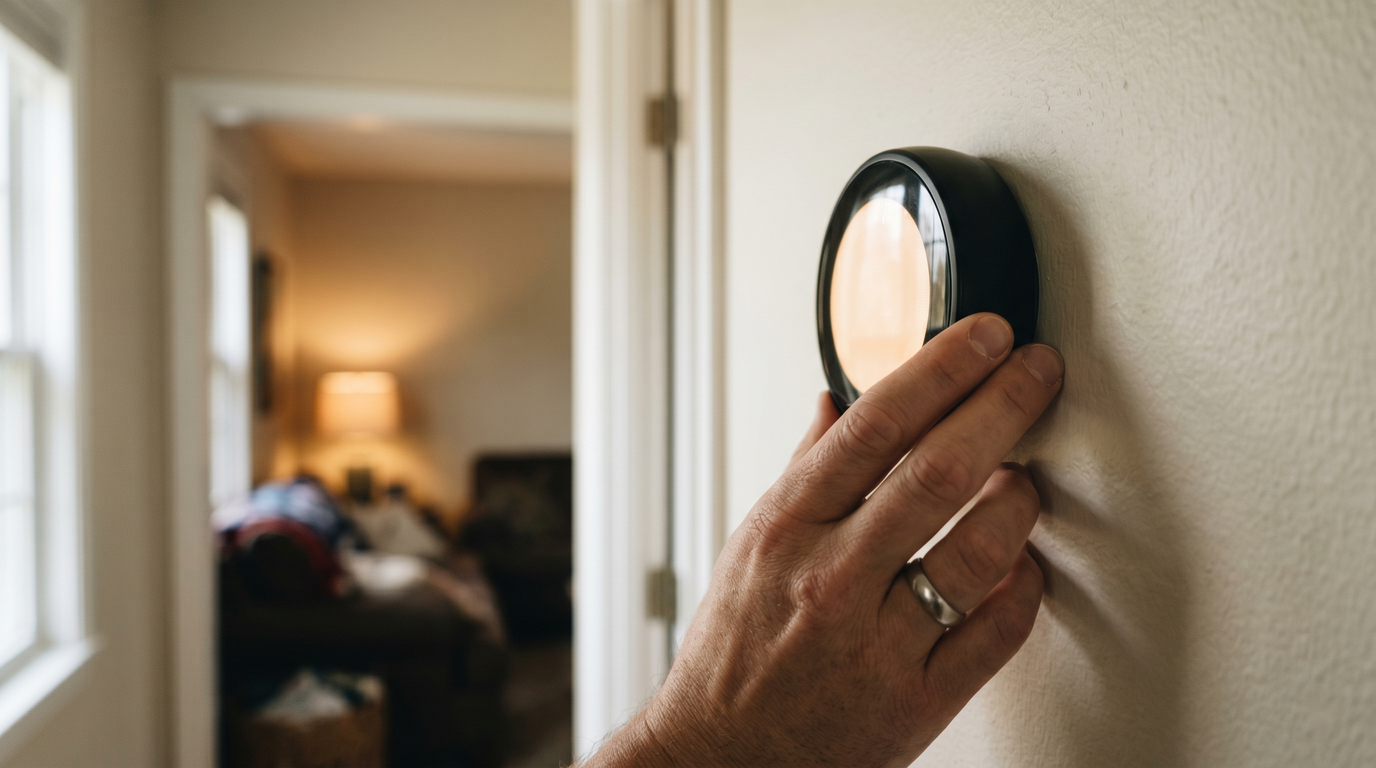
The first thing I did after closing on our house was buy a $30 programmable thermostat, screw it to the wall, and wait for my heating bill to drop. It didn't. Three months of winter went by and the gas bill looked exactly like it would have with the old round dial it replaced. I'd done everything the box promised and saved, as far as I could tell, nothing.
It took me an embarrassingly long time to figure out why: I never actually used the schedule. I'd programmed it once, then spent all winter walking past it and bumping the temperature up two degrees because I was cold, or holding it steady because I didn't trust it to warm the house back up before I woke. The thermostat was perfectly capable of saving me money. I just never let it.
That experience is the whole answer to the question in the title, so let me give it to you straight before the details: a programmable thermostat does not save money. A setback saves money. A setback is exactly what it sounds like: setting the temperature back. You let the house run several degrees cooler in winter (or warmer in summer) for a stretch of hours when comfort doesn't matter — while you're asleep or out of the house — then bring it back to normal when you're home and awake. That temporary retreat from your comfortable temperature is where every dollar of savings in this article comes from. The thermostat is just a tool for making setbacks automatic and consistent. If you'll do the setbacks by hand and never forget, the device saves you nothing it can't do without. If you won't — and most of us won't — then the right thermostat is worth real money. The trick is knowing which kind of person you are.
Programmable thermostat savings, the short version
About 10% a year on heating and cooling, per the U.S. Department of Energy — if you set the temperature back 7–10°F for eight hours a day and leave the schedule alone. On a $1,500 annual heating-and-cooling bill that’s roughly $150. Override it every day and the number drops to about zero. A smart thermostat doesn’t save more than that; it just makes the 10% far more likely to actually happen.
How Much Does a Programmable Thermostat Save? The One Number That's True
Strip away the marketing and there's a single, well-established figure underneath all of this. The U.S. Department of Energy estimates you can save about 10% a year on heating and cooling by turning your thermostat back 7–10°F for eight hours a day — while you're asleep or out of the house. The rule of thumb behind it is roughly 1% saved on your heating bill for every degree of setback, sustained over an eight-hour stretch.
That's it. That's the number every thermostat ad is ultimately leaning on, whether it says so or not. And notice what it's actually describing: it's not a number about hardware. It's a number about turning the temperature down for part of the day. A $9 manual thermostat and a $250 smart one deliver identical savings if they end up holding the same setback schedule. The expensive one just makes that schedule happen without you thinking about it.
Does Turning the Thermostat Down Save Money? Yes — Here's the Myth to Kill
Before we go further I have to kill the single most persistent myth in home heating, because if you believe it you'll never set your thermostat back at all. The myth goes: "It costs more to reheat a cold house than to just hold it at a steady temperature, so setbacks don't actually save anything." Your uncle believes this. He's wrong.
Here's the physics, and it's not complicated. A house loses heat to the outdoors in proportion to how much warmer it is than the air outside. The colder you let the inside get, the smaller that temperature gap becomes, and the slower your house bleeds heat. So during those eight hours at a lower temperature, your home is losing less energy than it would have at full temperature. Yes, your furnace has to work to reheat the house in the morning — but that morning burst is always less than the energy you saved by letting the house coast cool all night. The longer the setback, the bigger the net win. There is no "reheating penalty" that erases it. The DOE has been saying this for decades.
So Why Did the EPA Stop Certifying These?
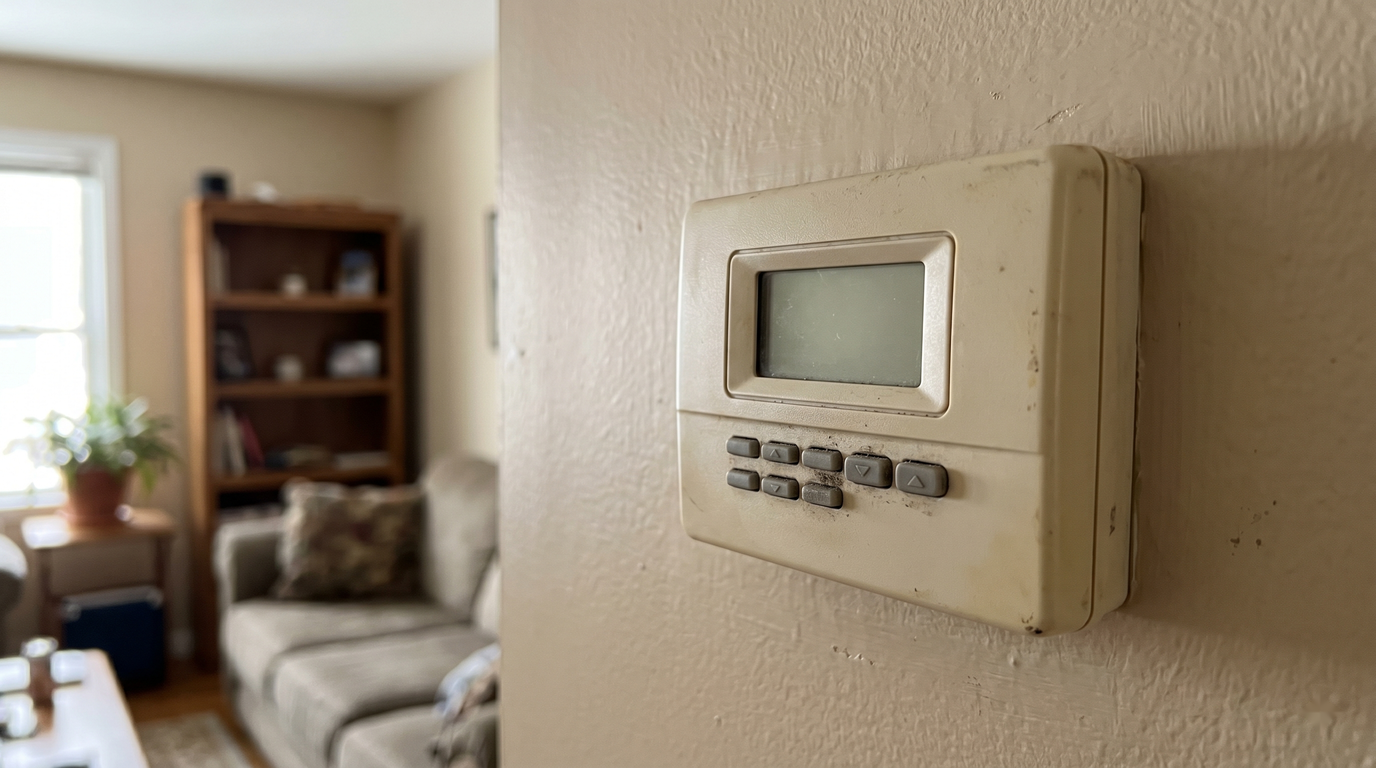
Here's the part the box doesn't mention. The programmable thermostat used to carry an ENERGY STAR label — the government's stamp that a product genuinely saves energy. Then, at the end of 2009, the EPA suspended that label for programmable thermostats entirely. Not because the physics stopped working. Because, in the real world, the savings stopped showing up.
When the EPA and DOE went looking at actual homes, they couldn't confirm that houses with programmable thermostats used any less energy than houses without them. The reason was almost entirely behavioral. People found the little buttons and four-period schedules confusing, gave up, and ran the thing at a constant temperature — which is exactly what a $9 manual thermostat does, except this one cost more. Others programmed a schedule but then overrode it constantly, hold button mashed, every single day. Sound familiar? It should. It was me, that first winter.
This is the most important thing to understand about the whole category: a programmable thermostat you fight is just an expensive manual thermostat. The hardware was never the problem. The interface was, and the human in front of it was.
The Real Answer, In a Table
So "do programmable thermostats save money" has no single answer — it depends entirely on which user you are. Here's the honest breakdown:
Two of those four outcomes save you real money, and two save you nothing. Which is why the device alone was never a reliable bet — and why the technology that actually moved the needle was the one that took the human out of the loop.
Does a Smart Thermostat Save Money?
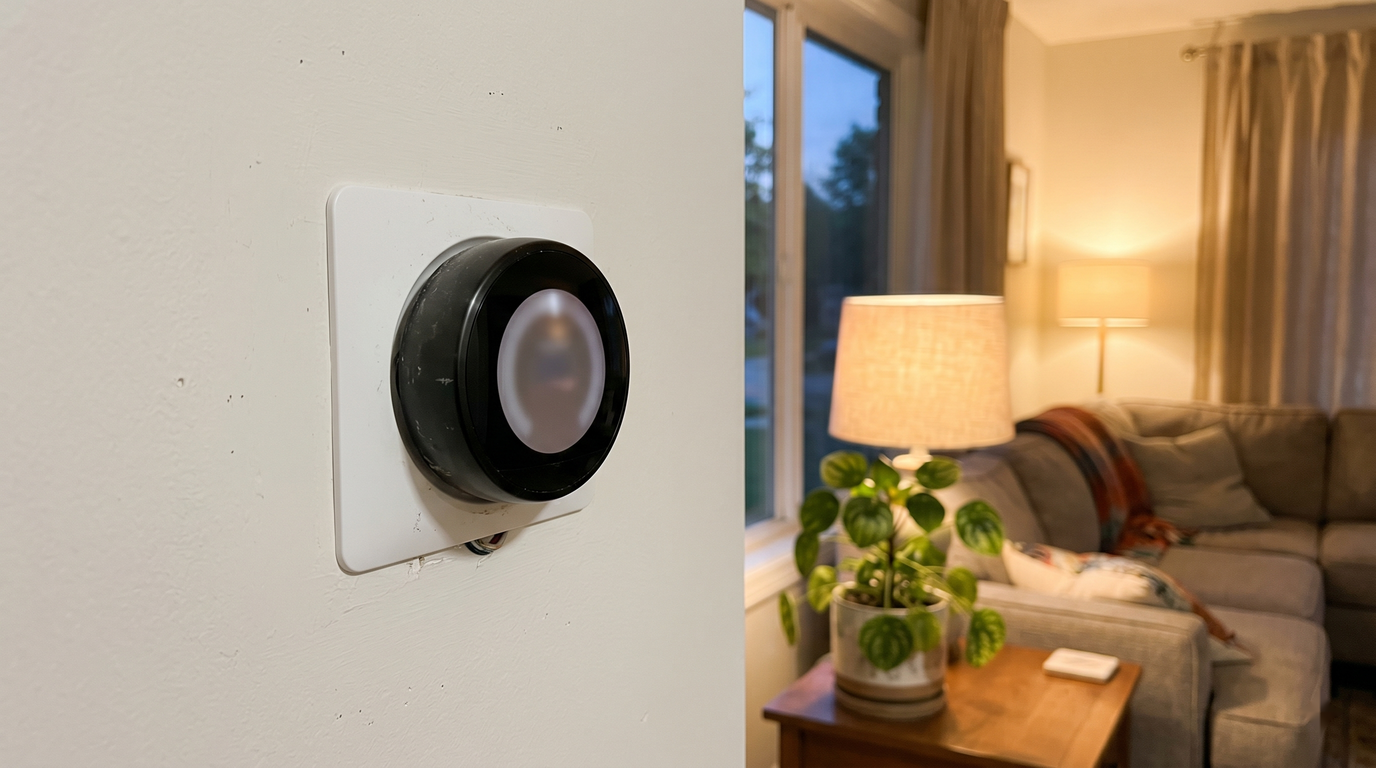
The smart thermostat — a Nest, Ecobee, or similar — exists to solve the behavior problem, not the physics problem. Instead of asking you to master a four-period schedule, it figures out the setback for you. It learns when you're typically home, senses when the house is empty and drops the temperature on its own (geofencing uses your phone's location), and lets you nudge it from an app on the couch instead of standing at the wall. The whole design goal is to make the money-saving setback happen whether or not you'd have remembered to do it.
Does it work? Mostly, with a grain of salt on the numbers. Google's own studies put the Nest at roughly 10–12% savings on heating and about 15% on cooling. Ecobee has advertised figures north of 20%. Independent reality tends to land more modestly, in the same ballpark as the DOE's 10% — and the savings depend heavily on one thing the brochures gloss over: how bad your habits were to begin with. If you already turn the heat down every night by hand, a smart thermostat will save you almost nothing, because you were already capturing the setback. If you're the "set it to 70 in October and never touch it again" type, it can save you a genuinely meaningful chunk, because it's introducing a setback you never had.
The Setting That Does the Work
If you buy a smart thermostat, turn on geofencing (location-based home/away) and let it auto-schedule for the first two weeks before you start fiddling. The single biggest mistake people make is disabling the automation because it's "annoying" — which lands you right back in override-it-constantly territory, paying smart-thermostat money for manual-thermostat results.
The Heat Pump Asterisk
One real caveat, because it's where people lose money trying to save it. If your home is heated by a heat pump, deep setbacks can backfire with the wrong thermostat. When a basic thermostat calls for a big temperature jump in the morning, the heat pump can't recover fast enough on its own, so it kicks on the auxiliary ("emergency") electric-resistance heat strips — which are expensive to run and can erase your overnight savings in an hour.
The fix isn't to skip setbacks on a heat pump; it's to use a thermostat that's built for one. Modern smart thermostats are heat-pump-aware: they ease the temperature back up gradually and avoid triggering the aux heat. If you have a heat pump, make sure whatever you buy explicitly supports it, and keep your setbacks moderate. This is also a good moment to make sure the rest of your system is pulling its weight — a clogged filter forces any system to work harder, so it's worth a look at our HVAC filter guide while you're at it.
Programmable vs. Smart Thermostat: The Payback Math
Money in, money out. Here's roughly what each tier costs and how fast it pays for itself, assuming you actually use the setback — because none of this works if you don't.
A cheap programmable that you genuinely use is the best raw return on this list — it pays for itself in a single heating season. The smart thermostat costs more and pays back slower, but it's the only option that delivers savings reliably, because it doesn't depend on you remembering. And don't overlook the third row: if you're disciplined, $0 and a little nightly habit captures the same savings as either device. Before you spend anything, it's also worth a quick DIY energy audit and sealing up the obvious drafts around doors and windows — a thermostat can only manage the heat your house is already losing through gaps in the envelope.
Will a New Thermostat Save You Money? How to Decide
Here's how I'd decide it, having been on the wrong side of this once already:
- You're disciplined and have a steady schedule: A basic programmable, or even your existing manual thermostat used well, captures nearly all the savings. Don't overspend.
- You forget, you have an erratic schedule, or your house is often empty at unpredictable times: A smart thermostat is worth it. The automation is the product, and it'll save you money you'd otherwise leave on the table.
- You have a heat pump: Go straight to a heat-pump-aware smart thermostat and keep setbacks moderate. Skip the bargain-bin programmable.
- You constantly override whatever you have: Be honest with yourself. A smart thermostat with geofencing left on automatic is the only thing that'll break the habit. If you'll just override that too, save your money entirely.
The thermostat on your wall is one of the very few home upgrades where the cheapest option and the most expensive option deliver the exact same physics. What you're really paying for, as you move up in price, isn't more savings — it's a higher chance you'll actually capture the savings that were available the whole time. Be honest about which kind of homeowner you are, and buy accordingly. If you want to walk the rest of the house for easy wins like this one, the energy audit guide is the place to start, and if you do go smart, our smart thermostat install walkthrough takes it from there.
Programmable Thermostat Savings: Common Questions
Does turning the thermostat down save money?
Yes. Every degree you set back for eight hours saves roughly 1% on heating, so a 7–10°F setback while you sleep or work is worth about 10% a year. The “it costs more to reheat the house” idea is a myth: a cooler house loses heat more slowly, and the morning warm-up always uses less energy than holding full temperature all night would have.
How much does a programmable thermostat save per year?
The DOE figure is about 10% of your heating and cooling costs, which for most homes works out to somewhere between $50 and $180 a year depending on climate, fuel, and how big a setback you run. That number assumes you actually let the schedule run; constant overrides bring it close to zero.
Do programmable thermostats save energy, or just money?
Both, for the same reason. The savings come from the furnace or air conditioner running less during the setback hours, so the energy reduction and the bill reduction track each other. A thermostat that holds one steady temperature all day saves neither.
Does a smart thermostat save money compared to a programmable one?
Only if you weren’t using the programmable one properly. Both deliver the same roughly 10% when they hold the same setback schedule. The smart thermostat’s advantage is that it builds the schedule itself and uses your phone’s location to set back automatically, so it captures the savings for people who never got around to programming the cheaper one. If you already run a disciplined schedule, expect little extra.
Will a new thermostat save me money if I have a heat pump?
It can, but pick one that is heat-pump aware. A basic programmable that demands a big morning temperature jump will trigger the expensive auxiliary heat strips and wipe out your overnight savings. Modern smart thermostats ramp the temperature up gradually to avoid that. Keep heat-pump setbacks moderate, around 4–5°F.
What temperature should I set a programmable thermostat to in winter?
The DOE guideline is 68°F while you’re home and awake, then 7–10°F lower (roughly 58–61°F) while you’re asleep or away. In summer, 78°F when home and warmer when out. Adjust for comfort; the savings scale with the size and length of the setback, not the exact number.
Heads up: the two product links above are Amazon affiliate links. If you buy through them it doesn’t cost you anything extra, and it helps keep these guides coming. I only link to gear I’d put on my own wall.