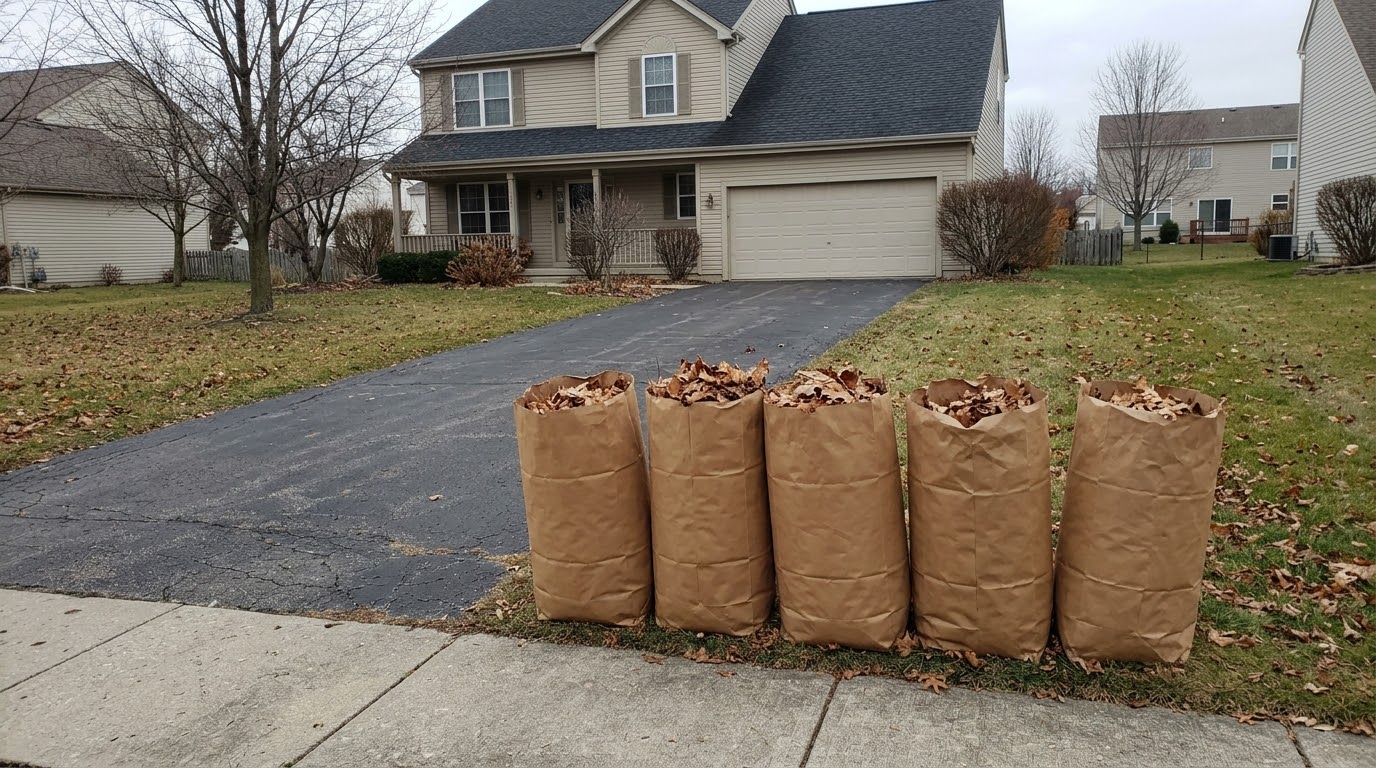
November is the closing-up month. The leaves finally come down, the mower makes its last trip around the yard, and the house turns its attention inward: heat, holidays, and the first real cold. October did the urgent work. November finishes the outside before it gets icy and gets the inside ready for company.
The deadline is the same one October had, the first hard freeze, plus the first snow if you live where it snows. Ladders and frozen ground don't mix, so the outdoor jobs come first. Thanksgiving is Thursday, November 26 this year, and it gets its own section, because it is the peak day of the year for home cooking fires. If you only have twenty minutes, skip to the short version at the bottom.
1. The Real Gutter Clean
This is the one the September and October checklists kept pointing at. Once most of the leaves are down, usually two to three weeks after peak color, clean the gutters for real. The gutter cleaning guide covers ladder setup, the scoop and flush, and when a two-story roof is a job for a pro. Its timing rule still holds: if you only get one cleaning, make it the last one before the freeze. A gutter that goes into winter packed with leaves holds water, and water that freezes in a gutter backs up under the shingles.
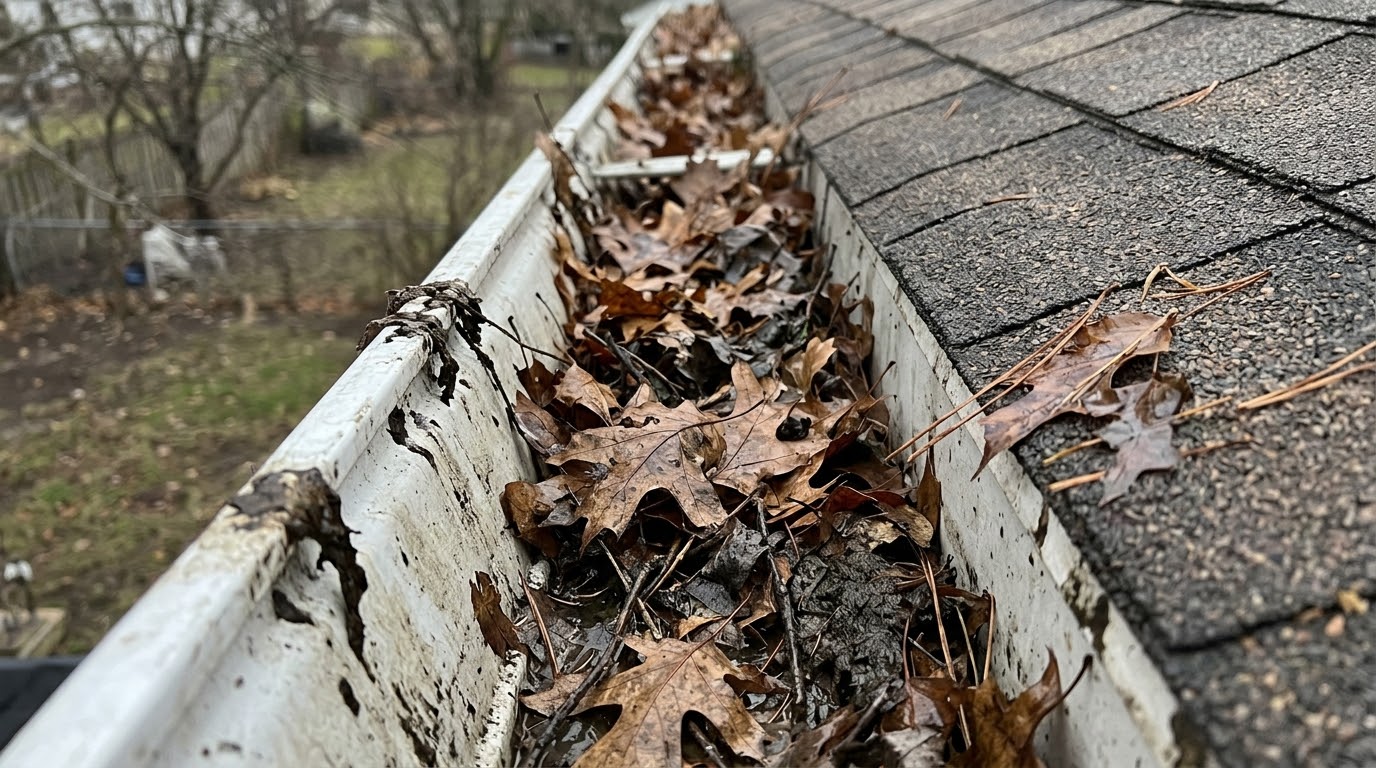
- Flush every downspout with a hose once the troughs are clear. Water should come out the bottom at full force. If it backs up, the clog is usually in an elbow, and the guide shows how to clear it.
- Check where the water lands. Every downspout should discharge at least four feet from the foundation, onto ground that slopes away from the house. A $12 extension fixes most of them.
- Look for sagging sections and loose hangers while you're up there. A gutter full of snow and ice weighs far more than one full of leaves.
- Trees still dropping? Do a light pass now and the final one in early December. Some oaks and beeches hold their dead leaves all winter, so don't wait for the very last one.
Ladder Season
Do ladder work on a dry day above freezing. Frost on the rungs and hard, uneven ground under the feet are how November ladder falls happen. If the forecast turns, the gutters can wait a week. Two-story gutters, steep roofs, or any doubt about the ladder: hire it out.
2. Last Mow, Last Feeding, Last Leaves
Cool-season grass keeps growing slowly until the soil gets cold, so keep mowing as long as it needs it. The full season plan is in the fall lawn care guide. The November part:
- Final mow: the lower end of your normal height is fine. Scalping it is not.
- Don't let leaves sit as a mat over winter. A thick layer of wet leaves smothers the grass and invites snow mold. Mulch them in with the mower while you can, and rake or bag the rest. Many towns run curbside leaf pickup through November, so check the schedule before you haul anything.
- The winterizer feeding, if it didn't go down in October, can still go down in early November in most cool-season areas, as long as the grass is still green and the ground isn't frozen.
- Warm-season lawns are dormant or close to it. No fertilizer now. Just keep the leaves off.
- Stay off frosted grass. Frozen blades snap underfoot, and the footprints turn brown.
3. Put the Mower and Small Engines Away
Gas left sitting in a small engine all winter is the main reason so many mowers won't start in April. The fix takes about twenty minutes, and the manual tells you which of two fuel methods your mower wants:
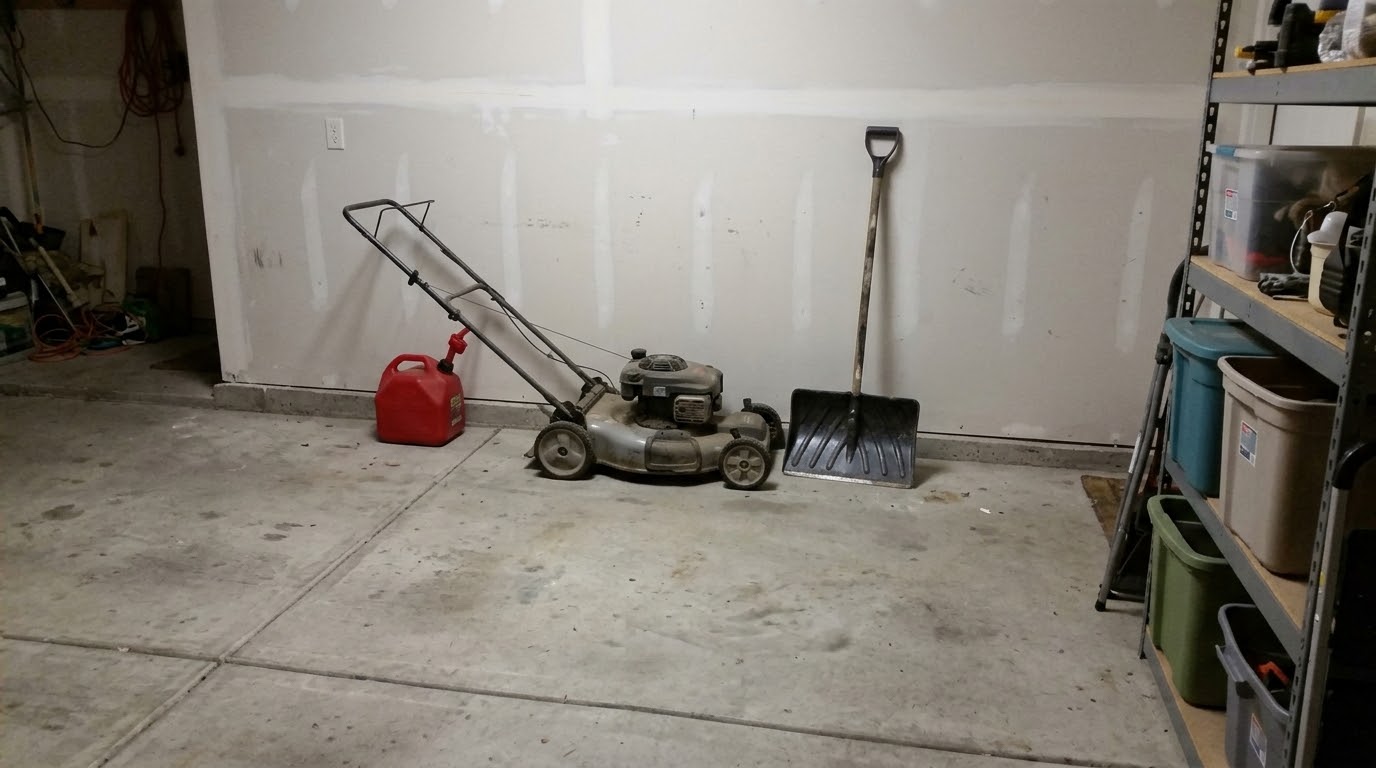
- Deal with the fuel. Either add fuel stabilizer to the tank and run the engine for a few minutes so treated gas reaches the carburetor, or run the tank completely dry. Manufacturers differ on which, so go with the manual.
- Disconnect the spark plug wire before you reach under the deck for anything. Then tip the mower with the air filter and carburetor side up and scrape the caked grass off the underside.
- Get the blade sharpened over the winter, while the shops are slow. A dull blade tears grass instead of cutting it.
- Bring the batteries inside. Battery mowers, trimmers and blowers all keep their batteries better at room temperature than in a cold garage. Follow the manual on how much charge to leave in them.
- Treat the other gas engines the same way. String trimmer, leaf blower, and the generator if it won't run again until spring. Clean and dry the hand tools, and wipe the metal with a little oil so it doesn't rust.
If the mower is on its last legs, winter is a good time to research the replacement. The battery vs. gas mower comparison lays out the cost and runtime trade-offs.
4. Get Ready for Snow and Ice Before You Need To
If you live where it snows, the first storm is the wrong time to find out the snow blower won't start. Do this on a mild weekend:
- Start the snow blower with fresh, stabilized gas and let it run for a few minutes. Look over the auger and the shear pins, and buy a couple of spare shear pins now. They are designed to snap when the auger hits something solid, and the hardware store is always out of them the morning after the first storm.
- Stake the edges of the driveway and walks with reflective markers before the ground freezes, so the plow and the snow blower know where the pavement stops.
- Buy ice melt early. Rock salt slows down a lot once the pavement gets into the teens. Calcium chloride keeps working in much colder weather. On concrete poured within the last year, use sand for traction instead of any deicer.
- Find the shovels, and if you get heavy snow, consider a roof rake for pulling snow off the lower edge of the roof after big storms.
- Check the outdoor faucets one more time. If a hose is still attached or an interior shutoff is still open, that is today's job. The steps are in the October checklist and the outdoor plumbing guide, and the first night in the low 20s won't wait for you.
5. Keep the Pipes From Freezing
Pipes rarely freeze in the middle of a heated room. They freeze where the heat doesn't reach: exterior walls, crawlspaces, garages, and attics. November is the time to find those spots, while crawling around down there is still comfortable.
- Insulate exposed pipes in an unheated garage, crawlspace or attic with foam pipe sleeves. They cost a couple of dollars a length and slide right on.
- Seal the drafts that blow on pipes, like a gap where a pipe leaves the house or a crawlspace vent that won't close. The DIY energy audit shows you how to find them.
- Know where the main water shutoff is, and make sure it turns. If a pipe does burst, that valve is the difference between a mop and a contractor. The move-in checklist covers where it usually hides.
- On the coldest nights, open the cabinet doors under sinks on exterior walls so room heat can reach the pipes, and let those faucets drip.
- Traveling for the holidays? Leave the heat at 55°F or higher, and think about shutting off the main water if you'll be gone more than a few days. A water leak sensor under the water heater and the sinks will alert your phone if something lets go while you're away.
6. The Heating Season Safety Round
Heating equipment is one of the leading causes of home fires in winter, and November is when the space heaters come out of the closet and the fireplace sees its first real use. Five checks:
- Check the furnace filter. With the heat running every day, a one-inch filter can load up within a month. Hold it up to a light. If you can't see light through it, change it. The filter guide covers sizes and which way the arrow points.
- Space heaters need three feet of clearance from anything that can burn, a spot where nobody will trip over them, and their own wall outlet. Not an extension cord, not a power strip. Turn them off when you leave the room or go to bed.
- Smoke and CO alarms: daylight saving time ended November 1. If the clocks changed and the alarms didn't get tested, do it this weekend.
- Clean the dryer lint screen every load, and check that the outside vent flap opens when the dryer runs. Dryer fires peak in the colder months.
- Fireplace ashes go in a metal can with a tight lid, outside on bare ground or concrete, away from the house and the deck. They stay hot for days. Never a paper bag, never the garage.
7. Before the Thanksgiving Crowd Arrives
A full house for a long weekend finds every weak spot in the plumbing. A little prep the week before saves a holiday-rate call to a plumber.
- Fix the running toilet in the guest bath before it runs all weekend. It is usually the flapper, a $10 part, and the running toilet guide walks through it in fifteen minutes.
- Clear slow drains now. A sink that drains slowly on a normal week clogs completely with a dozen guests. The drain guide starts with the cheap fixes.
- Go easy on the garbage disposal. Grease, turkey fat, potato peels and bones are what back up kitchen drains the day after Thanksgiving. Pour cooled fat into a can for the trash, and put the peels in the trash or the compost.
- Self-cleaning the oven? Do it a week or two ahead, not the night before. The cycle runs extremely hot, and if a fuse or a part is going to fail, you want time to get it fixed.
- Put a plunger next to every toilet. Guests will not ask where it is.
Frying the Turkey?
Outdoors only, on flat ground well away from the house. Never in the garage, never on a wooden deck, never under an overhang. The bird has to be completely thawed and patted dry. Measure the oil ahead of time with water: put the turkey in the empty pot, add water to cover, lift the turkey out, and mark the line. Dry the pot completely before the oil goes in. Keep a fire extinguisher close, and never put water on a grease fire.
8. Holiday Lights Without the Ladder Drama
Hang outdoor lights on a mild, dry November weekend, before ice makes the ladder and the roofline a bad idea. You don't have to turn them on until after Thanksgiving.
- Use lights and extension cords rated for outdoor use, and plug them into a GFCI outlet. Most exterior outlets already are. If pressing the test button doesn't cut the power, have an electrician look at it.
- Check every strand before it goes up. Cracked sockets, frayed wire or bare copper means that strand goes in the trash.
- Clips, not nails or staples. Plastic gutter and shingle clips hold the strands without piercing the wire or the gutter you just cleaned.
- Don't chain more strands together than the package allows.
- Put them on a timer. An outdoor plug-in timer or a smart plug shuts them off overnight, which saves power and is one less thing to remember.
- Ladder basics: firm, level ground, the top extended about three feet past the gutter edge, one foot out at the base for every four feet up, and someone holding the bottom.
Shopping this month? If there's a first-time homeowner or a griller on your list, the gifts for new homeowners and gifts for the griller guides sort the useful stuff from the drawer filler, by budget.
November at a Glance
November Maintenance Questions
Is late November too late to clean the gutters? No, as long as the ground and the ladder rungs aren't frozen. In a lot of yards late November is actually the ideal time, because the leaves are finally done. If ice has already formed in the gutters, wait for a thaw instead of chipping at it.
Should I drain the gas from my mower or add stabilizer? Either works, so go by the owner's manual. Stabilizer plus a few minutes of running is quicker. Running the tank dry avoids stale fuel entirely. What doesn't work is leaving untreated gas in the tank until April.
Do I really need to drip the faucets? Only on nights forecast well below freezing, and only for faucets on exterior walls or over unheated spaces. Moving water is much harder to freeze, and an open faucet relieves the pressure that actually splits the pipe.
When should the holiday lights go up? Whenever the weather is mild and dry, which in much of the country means November. Turning them on is a separate decision, and the neighbors will forgive lights that go up early and stay dark until after Thanksgiving.
The 20-Minute Version
Only have 20 minutes? Three things: make sure every hose is off and every outdoor faucet's interior shutoff is closed, check the furnace filter, and test the smoke and CO alarms if the November 1 check didn't happen. That covers the burst pipe, the struggling furnace, and the fire nobody hears. The gutters, the mower and the lights each want their own Saturday, and the gutters have their own guide.
For the whole season on one page, the fall home maintenance checklist sorts every job by deadline and has a free printable. If this is your first winter in the house, the free worksheet pack from the First-Time Homeowner's Handbook includes a maintenance log for writing down what you did and when. After November the house mostly asks for three things until spring: a fresh filter, clear walks, and a look at the gutters after the first big snow.