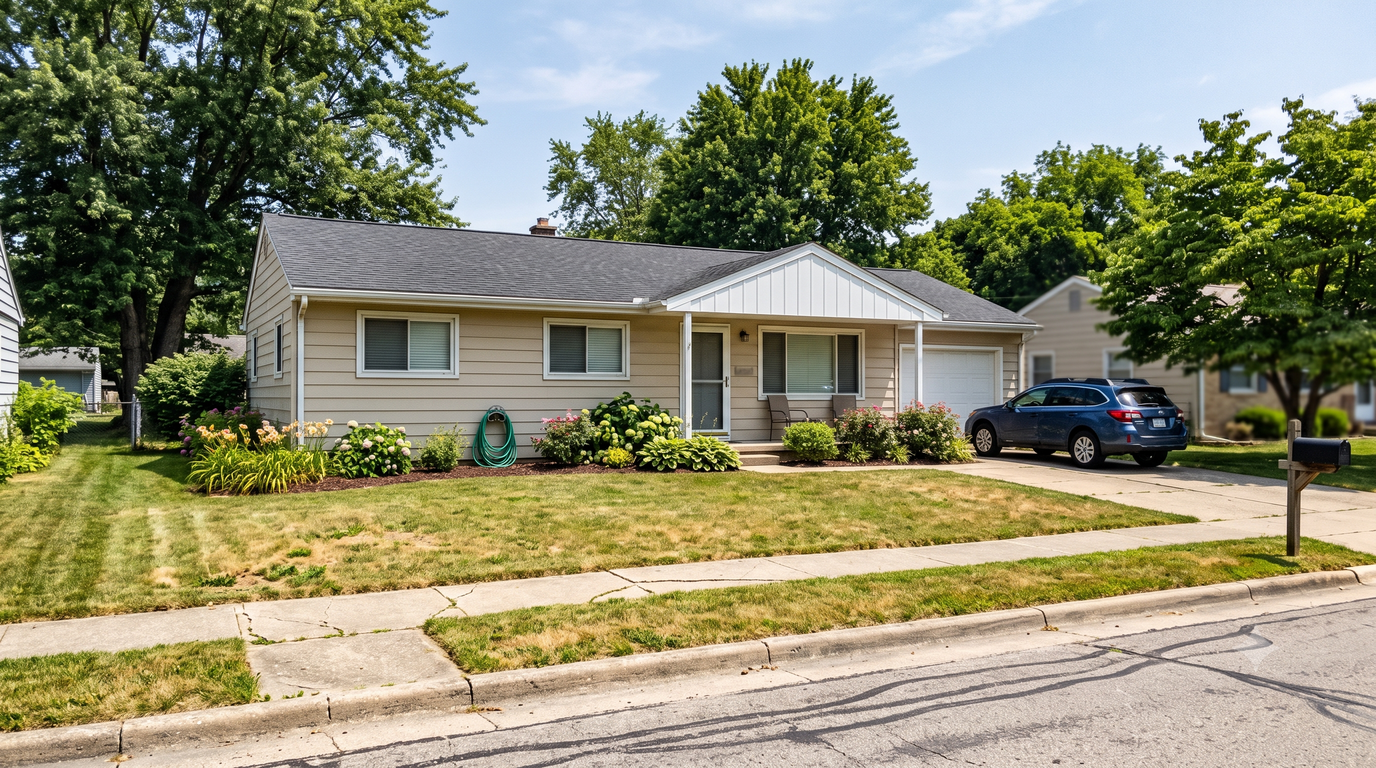
July is the month the house earns its keep. The AC hasn't had a day off in weeks, the sun is actively working on your paint and your deck boards, the yard has gone from growing to surviving, and there's a decent chance you're about to leave it all unattended for a week of vacation. July's list is short on projects and long on prevention — because everything that fails this month fails at the worst possible time, at the highest possible service rates.
Budget a Saturday morning for the full list, ideally early before the heat gets serious. Or skip to the 20-minute version at the bottom — it's July, nobody's judging.
1. Keep the AC Alive Through Peak Heat
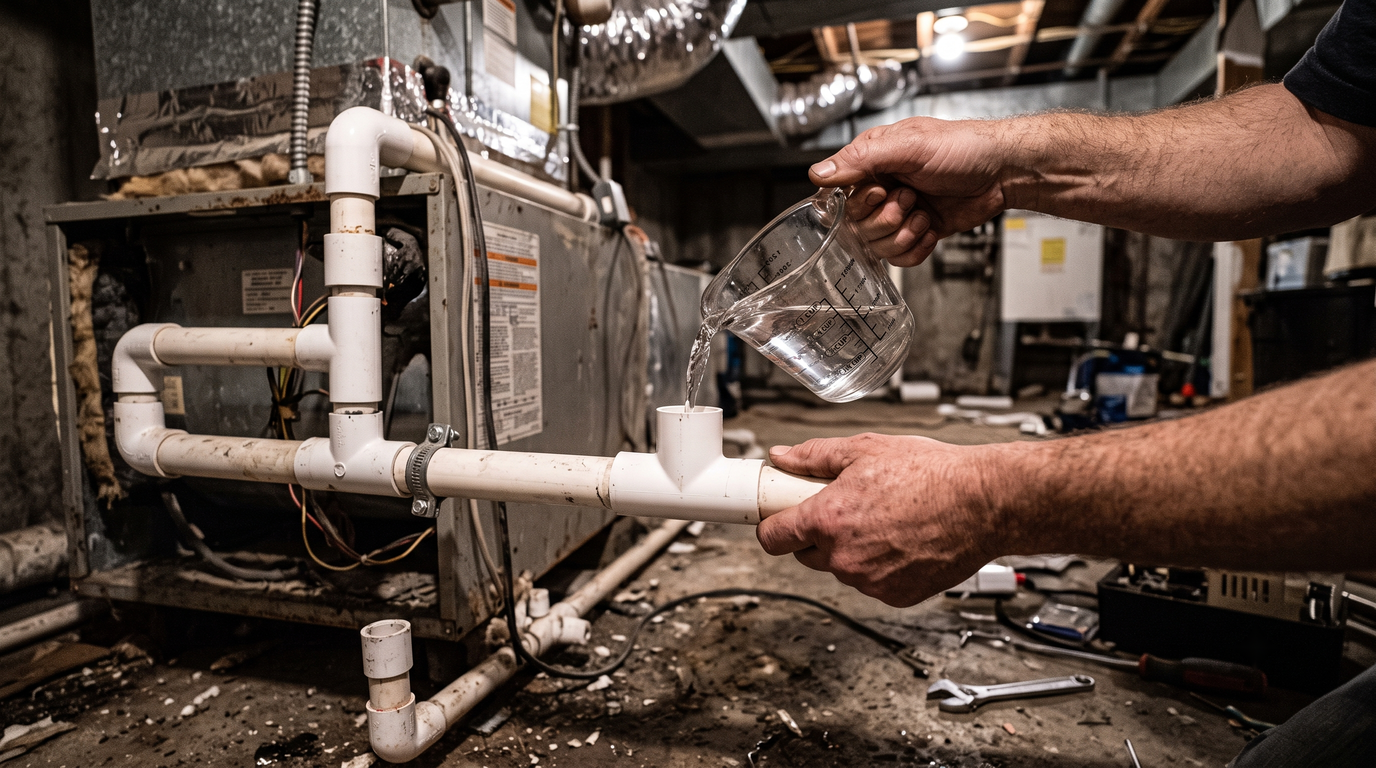
The filter first, always: in July the system runs enough hours that a filter can clog in a month, and a clogged filter is the cheapest AC failure there is. Here's the two-minute swap if it's gray. But July's real sleeper is the condensate drain line — the white PVC pipe near the indoor unit that carries away the water your AC wrings out of the air. In humid weather the system produces gallons of condensate a day, and that warm, wet pipe is prime real estate for algae. When it clogs, the drain pan overflows — and since the air handler usually lives in the attic or above finished space, "overflows" means a ceiling stain, or a ceiling.
The fix is almost embarrassingly easy: find the vertical access tee on the drain line near the unit, pull the cap, and pour in a cup of plain white vinegar. Let it sit and kill the gunk. Do it monthly through cooling season. While you're there, glance at the drain pan under the unit — standing water in the pan means the line is already draining slowly, and a wet/dry vacuum on the outside end of the drain line (usually a stubby PVC pipe dripping near the foundation) will pull the clog through before it becomes a ceiling. If the system itself seems to be losing ground — running constantly, weak airflow, ice on the lines — run the tune-up checklist before you pay for a service call in the most expensive month to need one.
Help It Out
Every degree you don't ask for is capacity the system keeps in reserve. Close blinds on the south and west sides during the afternoon, run ceiling fans so you can sit comfortably a couple degrees higher, and resist the urge to crank the thermostat way down after a hot afternoon — it doesn't cool faster, it just runs longer. If you're wondering whether those thermostat habits actually move the bill, here's the honest math.
2. Walk the Eaves: Wasp and Grub Patrol
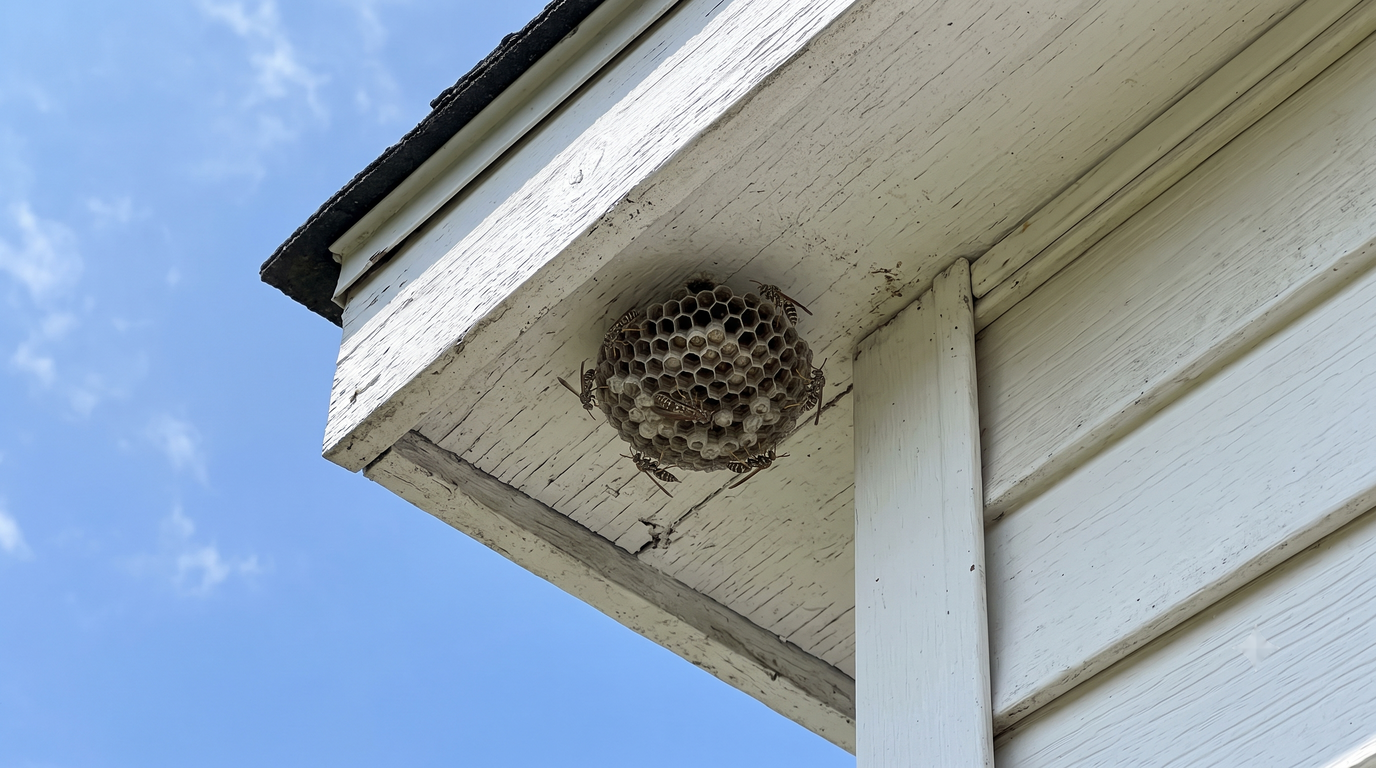
June was mosquito month; July belongs to the wasps. Paper wasps and hornets have been quietly building since spring, and by now the nests are big enough to matter — tucked under eaves, inside the grill you haven't opened in two weeks, behind shutters, under deck railings, and in the kids' playset. Walk the house perimeter early in the morning while they're sluggish and look up: a golf-ball nest now is a softball nest by August, and the treatment is a $5 can of wasp spray used at dusk from a respectful distance. A nest inside a wall void or in the ground (yellowjackets) is the one to hand off to a pro — that colony has thousands of residents and a bad attitude about eviction.
Down at ground level, July is when lawn grubs hatch and start feeding on grass roots. The tell: irregular brown patches in an otherwise watered lawn that peel back like loose carpet, because the roots are gone. Five or more grubs per square foot under a peeled patch means treating is worth it; a curative grub product goes down now, not in September when the damage is done. And keep up the standing-water patrol from June's list — mosquito season doesn't end until the first frost, and the perimeter treatment is due for a refresh if it's been eight weeks.
3. Vacation-Proof the House Before the Trip
If July includes a week away, twenty minutes before you leave prevents the two classic coming-home disasters: the water leak that ran for six days, and the break-in that took advantage of an obviously empty house.
- Turn off the water main. This is the single highest-value item on this entire page. A washing machine hose or toilet supply line that lets go with nobody home does five figures of damage. The main shutoff takes ten seconds; if you don't know where yours is, tonight is the night to find it.
- Set the water heater to vacation mode (or its lowest setting) — no point keeping 50 gallons hot for an empty house.
- Raise the AC to about 80, don't turn it off. Off invites humidity, and humidity invites mold and warped wood floors. A smart thermostat's away mode handles this automatically — here's the install if you've been meaning to.
- Put a couple of lamps on timers or smart plugs on an evening schedule, pause mail and packages, and ask a neighbor to grab anything that shows up anyway. A porch pile is a vacancy sign.
- Unplug the garage door opener (or use its lock/vacation switch) — it's the most commonly forgotten entrance in the house.
- Empty the fridge of anything with a deadline, run the disposal with a lemon, and take the trash out on the way to the car. Future you deserves a house that doesn't smell like an experiment.
4. Give the Deck and Driveway a Barefoot Check
Mid-summer sun is actively working on every horizontal surface you own. Walk the deck barefoot (that's the test) and flag anything that snags: popped nail heads, proud screws, and splintering boards all get worse from here, and each is a five-minute fix with a drill or a sander. Grab every railing and post and try to wobble it — a railing that gives now is a railing that fails when someone leans on it at the August cookout. If the deck boards have gone gray and thirsty and water no longer beads on them, note it for a staining weekend in September; July is too hot for stain to cure properly, so this month is for the fixes, not the finish.
The driveway and walkways get the same once-over. Heat expands small concrete and asphalt cracks all summer, then fall rain and winter freeze turn them into real damage. A tube of concrete crack filler or a bottle of asphalt crack sealer applied now — when the cracks are dry and open — is the difference between a $12 Saturday errand and a resurfacing quote. While you're out front, this pairs naturally with the quick wins in the curb appeal guide.
5. Walk the Exterior Caulk and Paint
The south- and west-facing sides of your house take a beating in July, and this is when last year's caulk gives up. Walk those two sides in the late afternoon and look at the joints: around window and door trim, where siding meets trim boards, and anywhere two materials meet. Caulk that's cracked, pulled away, or missing lets humid air and the next thunderstorm into the wall — and the repair is a $6 tube and a steady hand. The caulking guide covers the technique; exterior joints want a paintable exterior-grade caulk, not the bathroom stuff.
While you're looking: paint that's bubbling, peeling, or chalking on those sun-facing sides is past cosmetic — it's the wood's only sunscreen, and bare spots gray out fast. You don't have to repaint the house in July (please don't), but scraping and spot-priming the worst patches buys the siding a year and keeps a touch-up from becoming a carpentry project.
6. The Ten-Minute Garage Door Tune-Up
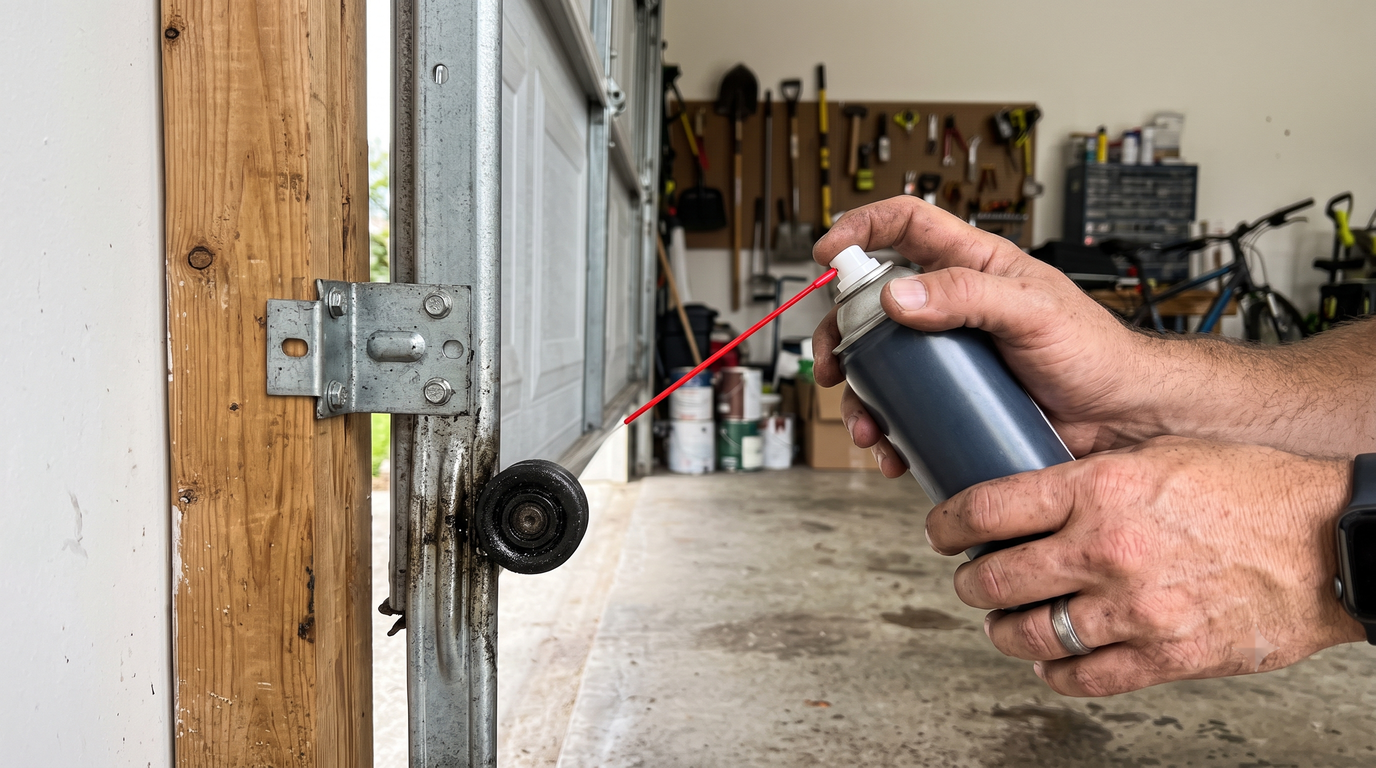
The garage door is the biggest moving thing in your house, it moves a thousand times a season, and summer heat thickens old grease into something closer to glue. Ten minutes: spray the rollers, hinges, and springs with a garage-door lubricant (white lithium or a silicone spray — not WD-40, which strips grease rather than replacing it), wipe the tracks clean with a rag, and snug up any hinge bolts that have rattled loose. Your reward is a door that stops announcing itself to the whole street.
Then the part that actually matters — the safety tests. Lay a 2x4 flat where the door lands and close it: the door should reverse the moment it touches. Then, with the door closing, wave a broom handle through the photo-eye beam near the floor: same deal, instant reverse. A door that fails either test has its safety systems out of adjustment, and that's the one garage-door job worth a service call, because the springs involved store enough energy to genuinely hurt you.
7. Put the Lawn in Survival Mode
Here's July's most freeing piece of lawn news: a brown lawn in a heat wave is usually not a dead lawn. Cool-season grasses go dormant in extreme heat as a survival strategy — the crowns stay alive while the blades check out. You have two honest options: water deeply and consistently (an inch a week, early morning, all summer) to keep it green, or water just half an inch every two or three weeks to keep the crowns alive and let it nap until September. Both work. The thing that kills lawns is switching between the two every time you feel guilty — pick a lane.
Either way: mow high (3 inches minimum — taller grass shades its own roots), keep the mower blade sharp because ragged cuts lose extra moisture in the heat, skip the fertilizer entirely until fall (feeding a heat-stressed lawn burns it), and stay off the grass as much as you can during the worst stretches. Dormant turf doesn't bounce back from foot traffic. The garden beds are a different story — if you ran drip irrigation, check the emitters monthly; a clogged emitter announces itself as one mysteriously dead tomato plant.
8. A Quick Interior Round
Fifteen minutes inside, mostly about humidity and the things that quietly work hardest in summer:
- Check basement humidity — summer air held below grade condenses, and anything over about 55% relative humidity is mold's happy place. A $10 hygrometer tells you; a dehumidifier set to 50% fixes it.
- Test every GFCI outlet (the ones with the little buttons, in bathrooms, kitchen, garage, and outside): press test, hear the click, press reset. Summer is peak season for outdoor cords and wet hands.
- Flip the bathroom exhaust fans on and hold a square of toilet paper to the grille — if it doesn't hold, the fan is gunked up. Pop the cover and vacuum it; a fan that can't move air can't fight July shower humidity.
- Look at the washing machine supply hoses — rubber that's bulging or cracked is a flood on a timer, and braided stainless replacements are $20 for the pair.
- If you have a sump pump, pour a bucket of water into the pit and make sure it kicks on — summer thunderstorms are exactly when you find out the hard way.
- Feel for hot air sneaking in around exterior doors on a blazing afternoon; if you can feel it, weatherstripping is a 20-minute fix that pays for itself before Labor Day.
The 20-Minute Version
Only have 20 minutes? Do exactly three things: pour a cup of vinegar down the AC condensate line and check the filter, walk the eaves and deck railings looking up for wasp nests, and run the garage door's 2x4 reverse test. That covers the ceiling-stain disaster, the emergency-room surprise, and the safety system everyone assumes works. If you're leaving on vacation this month, the water main shutoff jumps to the front of the line — it's the single best ten seconds of prevention on this page.
The monthly rhythm is the whole trick — none of this is a project if you catch it in July. When the month turns, the August checklist picks up right where this one leaves off. The bigger seasonal jobs live in the summer home maintenance checklist, and if the electric bill is making you wince despite everything, the DIY energy audit will show you where the money's leaking. Future you, coming home from vacation to a dry, cool, wasp-free house, will be glad you spent the morning.