
June is when the house stops practicing and starts playing for keeps. The AC runs every day now, the yard is at full throttle, the grill is in weekly rotation, and every small thing you didn't get to in May is about to matter. The good news: June's list is mostly about checking that everything you prepped is actually performing — and catching the summer-specific stuff before it bites.
Budget a Saturday morning for the full list. Or skip to the 20-minute version at the bottom — no judgment, it's hot out.
1. Check How the AC Is Actually Performing
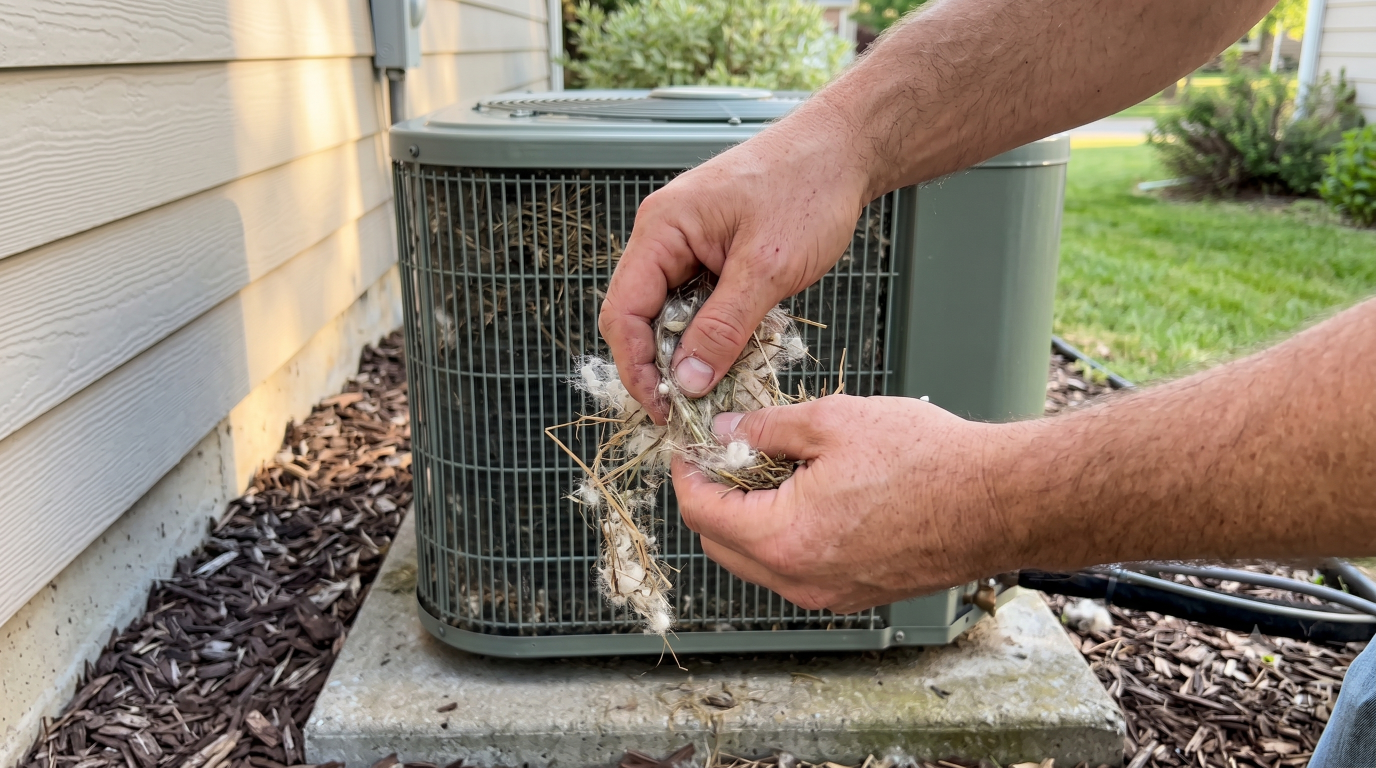
By mid-June the system has real hours on it, and this is when small problems announce themselves — if you're paying attention. Pull the filter and check it: a month of daily running clogs one faster than spring duty did, and here's the two-minute swap if it's gray. Then do the performance test: with the system running, the air from the vents should feel sharply cooler than the room — roughly 15 to 20 degrees below the return-air temperature. A cheap meat thermometer held in the airflow gives you an actual number if you want one.
Weak airflow, ice on the refrigerant lines, or a system that runs constantly without keeping up are all early warnings, and the tune-up checklist will help you chase them down while they're still cheap fixes. Outside, give the condenser a look every couple of weeks this month: June is exactly when cottonwood fluff and fresh grass clippings blanket the fins, and a matted condenser can't dump heat. Kill power at the disconnect, pull the debris off by hand, and rinse the fins gently from the inside out with a garden hose — never a pressure washer, which folds the fins flat. While you're down there, keep plants and mulch trimmed back at least two feet for airflow.
Watch the bill, not just the thermostat
A system that's slowly losing refrigerant or running on a dirty coil often still cools — it just runs longer and longer to do it. If this month's electric bill jumps well past last June's for similar weather, that's your cue to investigate before the system fails outright in August, when every HVAC company in town is booked solid.
2. Go on Mosquito and Ant Patrol

June is peak breeding season, and the difference between a usable backyard and a miserable one is usually standing water. Mosquitoes need less than a bottle cap of water and about a week, which means your property is full of nurseries you've stopped seeing. Walk the yard and dump anything holding water: plant saucers, the kids' toys, a clogged gutter elbow, the tarp over the firewood, the wheelbarrow, that bucket behind the shed. Birdbaths get fresh water twice a week; rain barrels get a screen over the inlet.
For the yard itself — barrier sprays, granules, and which sprayer actually makes the job easy instead of an arm workout — the full playbook is in our DIY yard insect control guide. Treat the perimeter in June and you're protected through the heart of the season. Ants get the same early-action logic: scouts showing up on the kitchen counter now mean the colony has found a food source, and the whole crew is coming. Wipe the scout trail with vinegar to erase the scent line, find the entry point, and put bait stations outside it — killing the scouts you see does nothing; the bait they carry home does everything.
Pro Tip
Refresh standing-water patrol after every rain, not once a month. A five-minute walk with your morning coffee the day after a storm does more for mosquito control than any spray.
3. Test Every Smoke and CO Detector
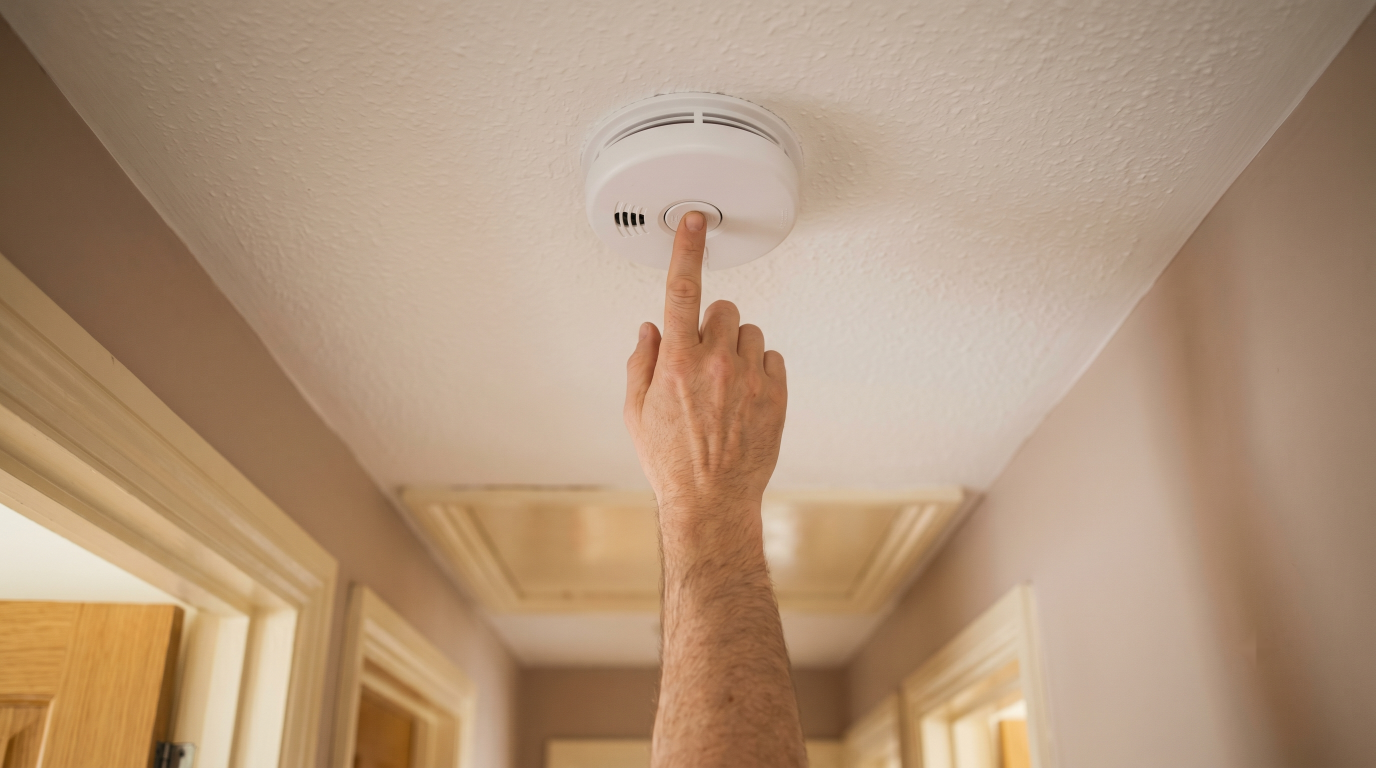
June is National Safety Month, which is as good an excuse as any for the test you've been putting off. Press and hold the test button on every detector in the house — actually every one, including the basement, the garage, and the one in the guest room nobody sleeps in. The alarm should be loud and immediate. Swap any battery you can't remember replacing; if a unit chirps even with a fresh battery, it's telling you something.
While you're up on the step stool, check the manufacture date printed on the back of each unit. This is the one everybody skips: smoke detectors age out at 10 years, CO detectors at 5 to 7, and a detector past its date can fail silently no matter how new the battery is. The sensors literally wear out. If yours are originals from when the house was built and the house isn't new, this is a $15-per-room fix for the thing that matters more than everything else on this list combined.
4. Look at the Roof (From the Ground Is Fine)
Spring storms have had their fun; now find out what they did. Walk the perimeter with binoculars or a zoomed phone camera and scan for lifted or missing shingles, exposed nail heads, granule-bare patches that look darker than the rest, and damaged flashing around the chimney and vents. Check the ground while you walk — shingle granules piling up at the downspout outlets mean the roof is shedding its protective layer, and an actual shingle corner in the flower bed means the wind found a weak spot.
Then poke your head into the attic on a sunny day: daylight where it shouldn't be, water stains on the sheathing, or a musty smell all mean water is getting in somewhere. While you're up there, confirm the attic isn't suffocating — soffit vents blocked by insulation or a dead attic fan turn the space into a 140-degree oven that cooks your shingles from below and leaks heat into the ceiling all summer. Catching a $200 shingle repair in June beats discovering a ceiling stain during an August thunderstorm, and roofers' schedules only get worse from here.
5. Give the Gutters a Post-Storm Once-Over
Even if you cleaned them in May, June's storms knock down a fresh round of twigs, seed pods, and the occasional tennis ball. You don't need the full ladder treatment — during the next good rain, walk the house and watch: water sheeting over a gutter edge or a downspout that's barely trickling tells you exactly where the clog is. Fix the one spot instead of redoing the whole perimeter. And if a section overflows right above a door or a foundation corner, move it up the priority list; that's the water that ends up in basements.
6. Pull the Grill Out of Neglect
The grill works hard from here through September, and June is the month to make sure it's not a hazard. Deep-clean the grates and burn off the grease — built-up grease is the number one cause of grill fires. On a gas grill, check the burner ports for clogs (uneven flame = blocked ports) and test every connection with soapy water after you hook up the tank: bubbles mean a leak, and a leak means fix it before the next cookout. Check the hose for cracks while you're at it; rubber that's lived outside for years dries out. Charcoal griller? Empty the ash — damp ash eats through the bottom of a kettle faster than you'd think.
7. Switch the Lawn to Summer Rules
The spring growth party is over and survival season is starting. Raise the mower deck to 3 inches or higher — taller grass shades its own roots, holds moisture, and outcompetes crabgrass, and the manicured-short look is exactly what turns a lawn brown in July. Mow when the grass is dry, and leave the clippings down; they're free fertilizer.
Watering follows one rule: deeply and infrequently. About an inch a week including rain, delivered in one or two early-morning sessions, beats a daily sprinkle every time — shallow daily watering grows shallow roots that fry in the first heat wave. An empty tuna can on the lawn tells you when a session has delivered enough. If you set up drip irrigation for the garden beds, June is when it earns its keep — confirm the timer is actually running and the emitters aren't clogged before the first heat wave tests it.
8. A Quick Interior Round
Fifteen minutes inside catches the slow, expensive stuff:
- Set ceiling fans to spin counterclockwise (looking up) so they push air down — and dust the blades while you're up there. A fan lets you set the thermostat 2–3 degrees higher with no comfort loss.
- Check around the water heater, washing machine, and under sinks for damp spots or mineral crust. A $15 leak sensor in each spot does this job for you year-round.
- Feel for hot air leaking in around exterior doors on a hot afternoon — if you can feel it, weatherstripping is a 20-minute fix that pays for itself this summer.
- Clean the dryer lint screen housing and confirm the outside vent flap opens freely. Dryer fires don't take summers off.
- Slide the fridge out and vacuum the condenser coils — dusty coils make the compressor fight the summer kitchen heat, and it's a five-minute job.
- Check window screens for tears before you start leaving windows open on cool evenings. A screen patch kit is a couple of dollars; a house full of June bugs is not.
The 20-Minute Version
Only have 20 minutes? Do exactly three things: check the AC filter and vent temperature, dump every container of standing water on the property, and test the smoke detectors. That covers the expensive failure, the miserable backyard, and the one that actually matters. The rest can wait for next weekend — write the two or three items that apply to your house on a sticky note and knock them out one evening each.
If you keep up with the monthly rhythm, none of this ever becomes a project — that's the whole trick. The bigger seasonal jobs live in the summer home maintenance checklist, and if the AC bill still stings after all this, the DIY energy audit will tell you where the money's going. Future you, grilling in a mosquito-free backyard while the AC hums along at a reasonable bill, will be glad you spent the morning.