There's a category of home upgrade that real estate agents, hotel designers, and your one friend with the suspiciously nice apartment all know about, and it has nothing to do with renovations. It's the small stuff you touch and see fifty times a day — handles, light, water, the feel of a switch — where a hundred dollars buys a change your brain registers every single time. Meanwhile the $4,000 upgrade (looking at you, new flooring) disappears from your awareness in about a week.
So here are ten of those, every one under $100, none requiring a contractor, a permit, or more than an afternoon. Fair warning: the whole list together costs less than a single emergency plumber visit, which is exactly the kind of math that ends with you at the hardware store by 10 a.m. Saturday.
1. Swap Your Cabinet Hardware
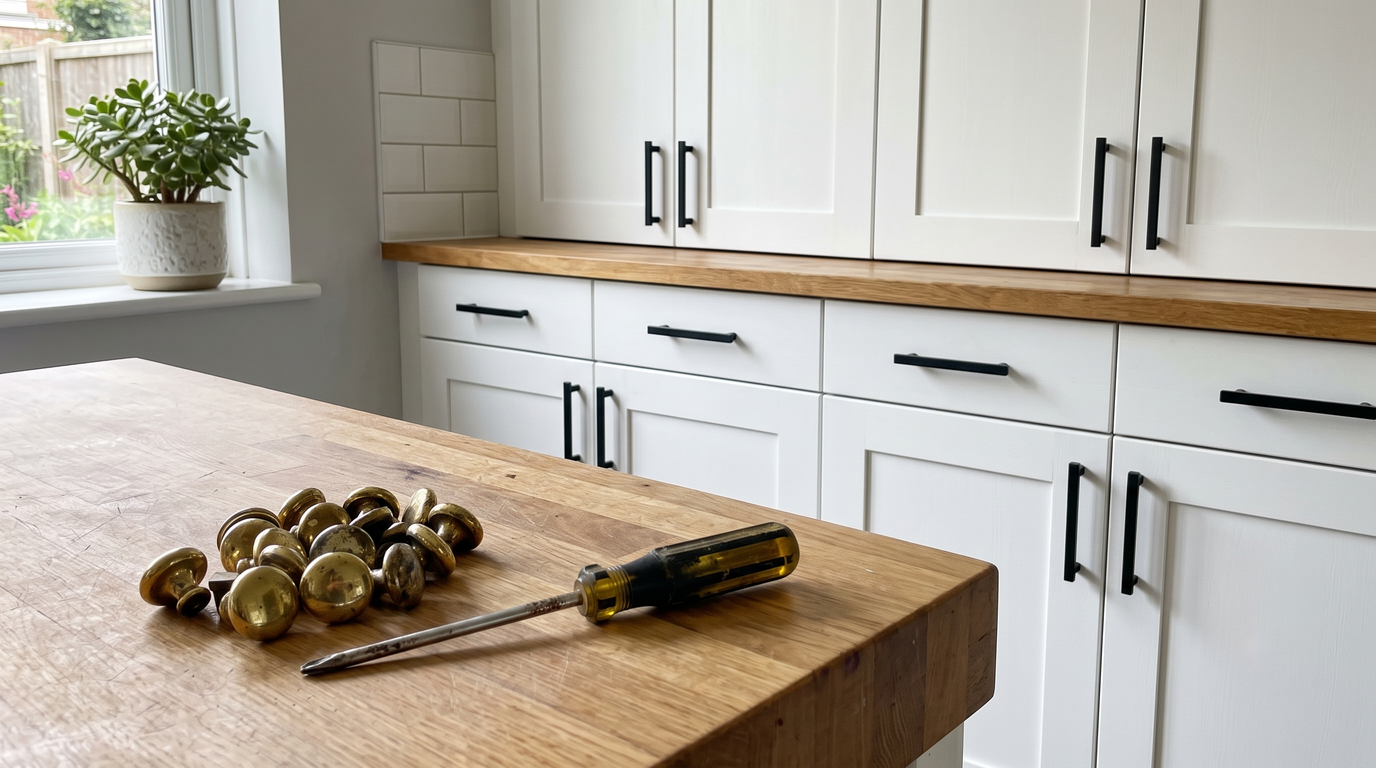
Builder-grade cabinet knobs are the beige sedans of the kitchen — technically fine, invisible on purpose. Swapping every knob and pull in an average kitchen runs $60–90 for a multipack of matte black or brushed brass pulls, takes one screwdriver and one podcast episode, and reads as "renovated kitchen" from across the room. The only rule: measure the hole spacing on your existing pulls (center of screw to center of screw — usually 3" or 96mm) and buy the same, so you're not drilling new holes on your first rodeo. It's the anchor move of the whole weekend kitchen refresh for a reason.
2. Light the Counters, Not the Ceiling
Every kitchen has the same design flaw: the ceiling light is behind you at the counter, so you prep dinner in your own shadow. Under-cabinet LED strips fix it for $25–40: stick them to the underside of the upper cabinets, run the cord to an outlet, done. Warm white (2700–3000K), not the blue-white "operating room" ones. The first evening you flip them on, the kitchen looks like it costs more than your car payment, and there's no going back.
3. Peel-and-Stick Backsplash (Yes, Really)
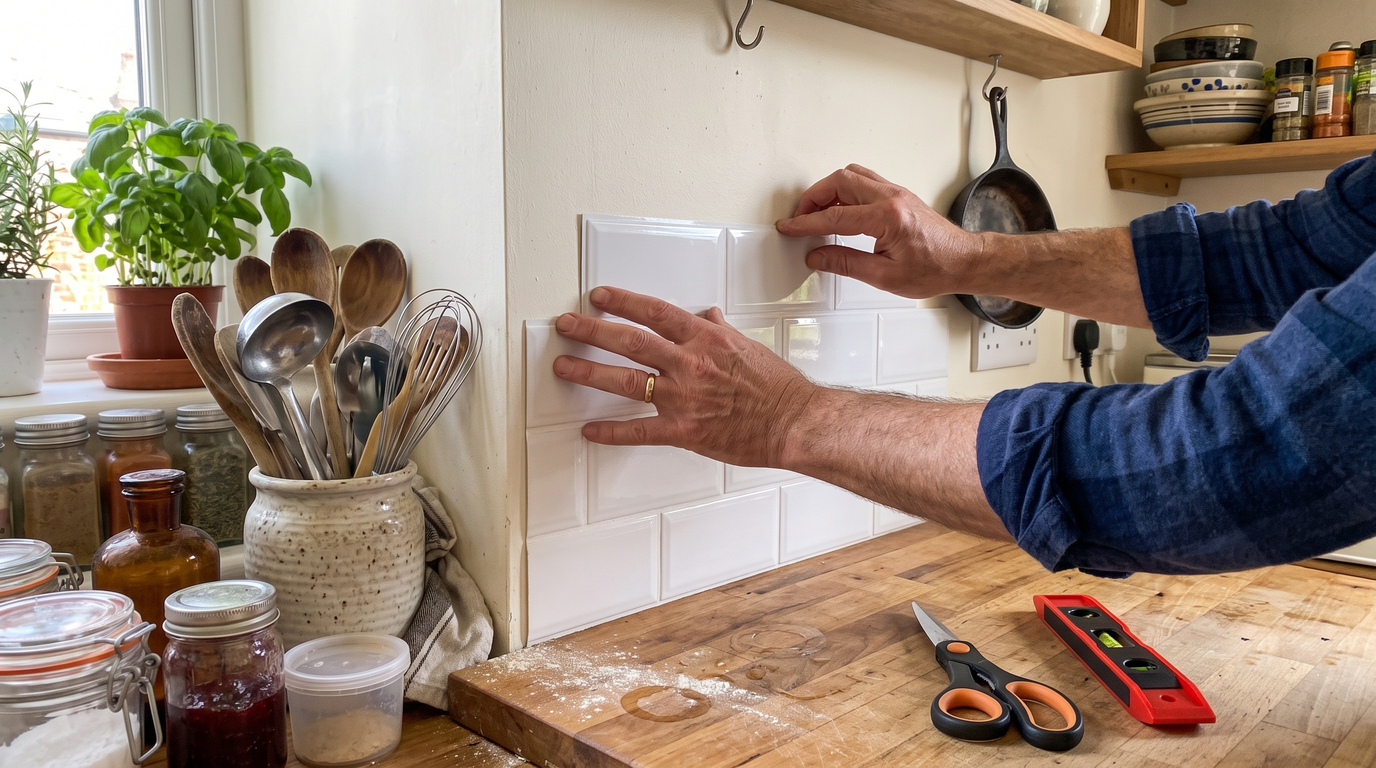
Peel-and-stick tile spent years earning a bad reputation and then quietly got good. The current generation of thick gel subway tiles has real dimension — you have to touch it to catch the trick. A standard backsplash run costs $50–80 in panels, cuts with scissors, and installs in an afternoon over clean, degreased wall (that last part is the whole ballgame — wash the wall twice). Renter bonus: it peels off when you leave, which is why half the nice kitchens on Pinterest are rentals.
4. Put the Living Room on a Dimmer
The difference between "overhead light at full blast" and "light that matches 9 p.m." is the difference between a waiting room and a home. A LED-compatible dimmer switch is $15–25, and swapping one in is the same ten-minute job as replacing any switch: breaker off, test it's dead, three wires, done — the gateway electrical project. Do the living room and dining room first; those are the rooms where mood actually matters. (One caveat from the ceiling fan world: dimmers are for lights only, never fan motors.)
5. Retire the Brass Doorknobs
If your interior doors still wear 1990s shiny brass, every one of them is quietly dating the whole house. New passage knobs run $10–15 each — two screws through the plate, swap, done, no chisel work because the latch and strike plate are already sized. Do the main floor (usually five or six doors) for about $70 and the hallway suddenly looks like someone who owns a level lives here. Match your finish to the cabinet hardware from #1 and it reads as a decision, not a coincidence.
6. The Shower Head Your Mornings Deserve
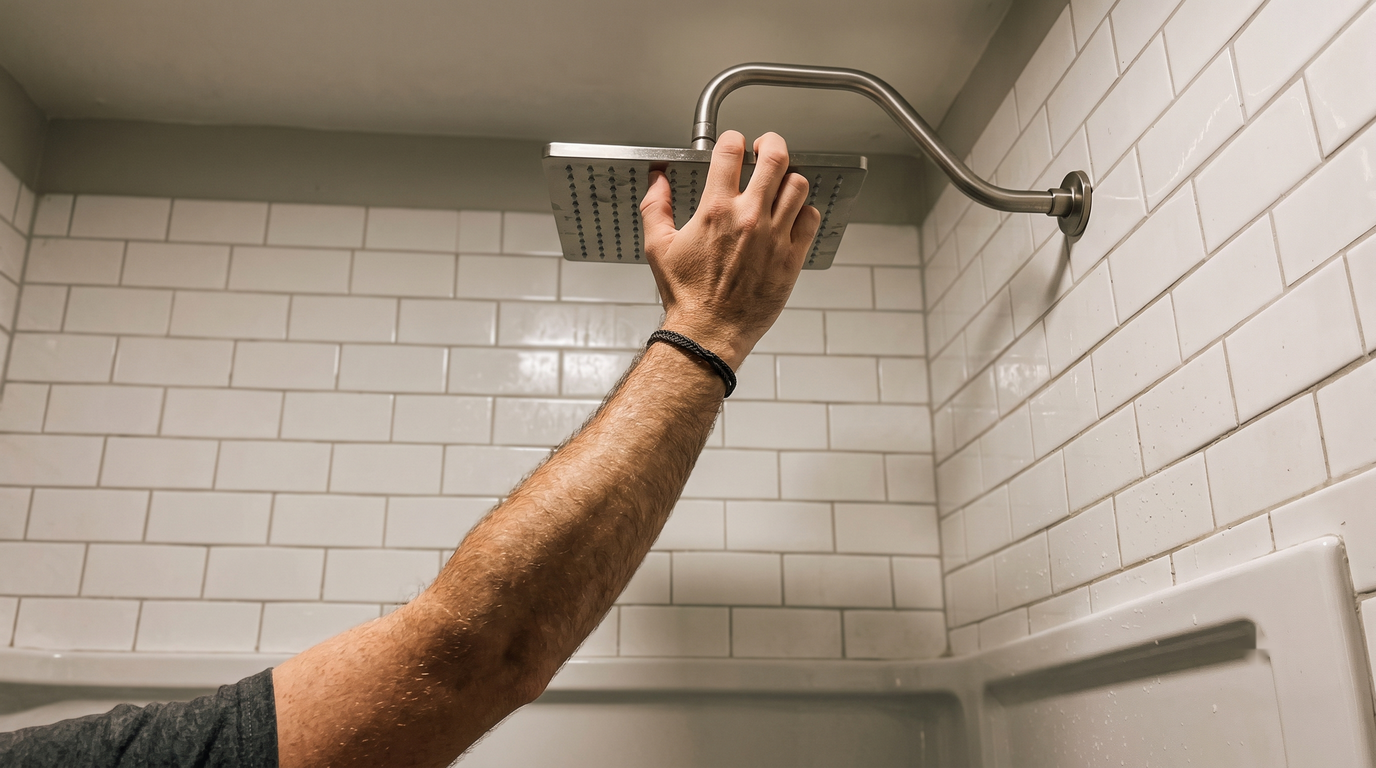
The shower head that came with your house was chosen by whoever had the lowest bid, and you stand under it every day of your life. A good rainfall or high-pressure head is $30–70 and the entire installation is: unscrew old one (lefty-loosey, use a rag for grip), wrap the shower arm threads with two or three wraps of plumber's tape, screw on new one, hand-tight plus a quarter turn. No plumber has ever been required. It's the single highest quality-of-life-per-dollar item on this list — except possibly #8.
7. Give the Bathroom Fresh Caulk Lines
Here's a weird one: nothing — not new towels, not a new vanity — makes a bathroom read "clean and well-kept" like crisp, bright white caulk lines around the tub and sink. And nothing undoes it like caulk that's cracked, peeling, or going gray at the corners. A tube of tub-and-tile caulk is $8, a removal tool is $10, and the full strip-and-redo is a two-hour job with a genuinely satisfying peel in the middle of it. The caulking guide has the painter's-tape trick that makes your lines look machine-applied. Bonus: it's not just cosmetic — failed caulk is how water gets behind tile, and that repair has a comma in it.
8. The $40 Upgrade Nobody Talks About
A bidet attachment. Yes, really. It installs in twenty minutes with zero plumbing skills — turn off the toilet's supply valve, flush, unscrew the supply line, add the attachment's T-valve, reconnect — and it costs $35–50. Nobody plans to become a bidet person. Then they spend one week with it and start evangelizing at dinner parties. This is the list's highest ratio of "life improvement" to "willingness to admit it out loud," and that's exactly why it's here at number eight instead of number one, where it belongs.
Renting?
Six of these ten — the backsplash, shower head, bidet, smart plugs, LED strips, and arguably the doorknobs if you keep the originals in a shoebox — move out when you do. Renting doesn't mean living with the landlord's shower head.
9. Smart Plugs for the Lamps You Already Own
You don't need a smart home; you need the lamps to come on at dusk without you touching anything. A four-pack of smart plugs is $25–35: plug lamp into plug, plug into wall, set a sunset schedule in the app, and the house starts glowing warmly on its own every evening like somebody competent lives there. It's also the vacation-mode trick from the July checklist — a lived-in-looking house while you're at the beach. If this one clicks, the full smart home starter kit is the deeper end of the same pool.
10. Weatherstrip the Leaky Doors
The only item on this list that literally pays you back. If you can see daylight around your exterior doors — or feel July radiating through the gap — a $20 weatherstripping kit and a door sweep close the equivalent of a fist-sized hole in your wall. Twenty minutes per door, and the AC stops cooling the front porch on your dime. The full walkthrough is here, and if you want to find every other place the house is leaking money, that's what the DIY energy audit is for. Not glamorous. Extremely effective. Somebody on this list had to be the responsible one.
The Scoreboard
The pattern in all ten: money aimed at the things you touch, see, and feel daily beats money aimed at square footage, every time. Pick the two that made you look up from your phone, do them this weekend, and if the momentum carries you, the weekend kitchen refresh and curb appeal guide are the natural next chapters — same philosophy, bigger canvas. The bidet people already know who they are.