Heads up: some links on this page are Amazon affiliate links. As an Amazon Associate I earn from qualifying purchases. If you buy through one, it costs you nothing extra.
Most winterizing lists live outside: gutters, sprinklers, the outdoor faucets. Those matter, and the fall checklist covers them. This list is the other half. It's the inside of the house, where the jobs are smaller, most take ten minutes, and nearly all of them work in an apartment too.
Two of them have a deadline. The rest can happen any weekend before it gets properly cold.
The Two With a Deadline
The deadline is the first hard freeze, a night that drops to about 28°F or lower.
- Garden hoses off the outdoor faucets. Unhook each one, drain it and coil it for the winter. If the faucet has its own shutoff valve inside the house, close it, then open the outdoor tap and let the line empty. A hose left on traps water in the faucet, and that water can freeze back into the pipe and split it inside the wall. The full outdoor version is in winterizing irrigation and outdoor plumbing.
- The window AC, out or sealed. Taking it out is a two person job done from inside the room: one person holds the unit the whole time while the other raises the sash. Window units often weigh 40 to 80 pounds, and nobody leans out. Store it upright, level and covered, somewhere dry. If it stays in, fit an indoor AC cover (about $15 to $25) over the front and seal the gaps around the side panels with foam weatherstrip (about $5 to $10).
Upstairs Units
A window unit always comes out into the room, toward you, never outward through the window. A slip outside lands on whoever is below.
Switch the Air
Reverse the ceiling fans. In winter a fan should turn clockwise, on low, as you look up at it. Turning slowly that way, it pushes the warm air that collects at the ceiling back down along the walls. You shouldn't feel a draft. Turn the fan off, wait until the blades stop, and flip the small slide switch on the motor housing. Many newer fans have no switch; the reverse button is on the remote or the wall control.
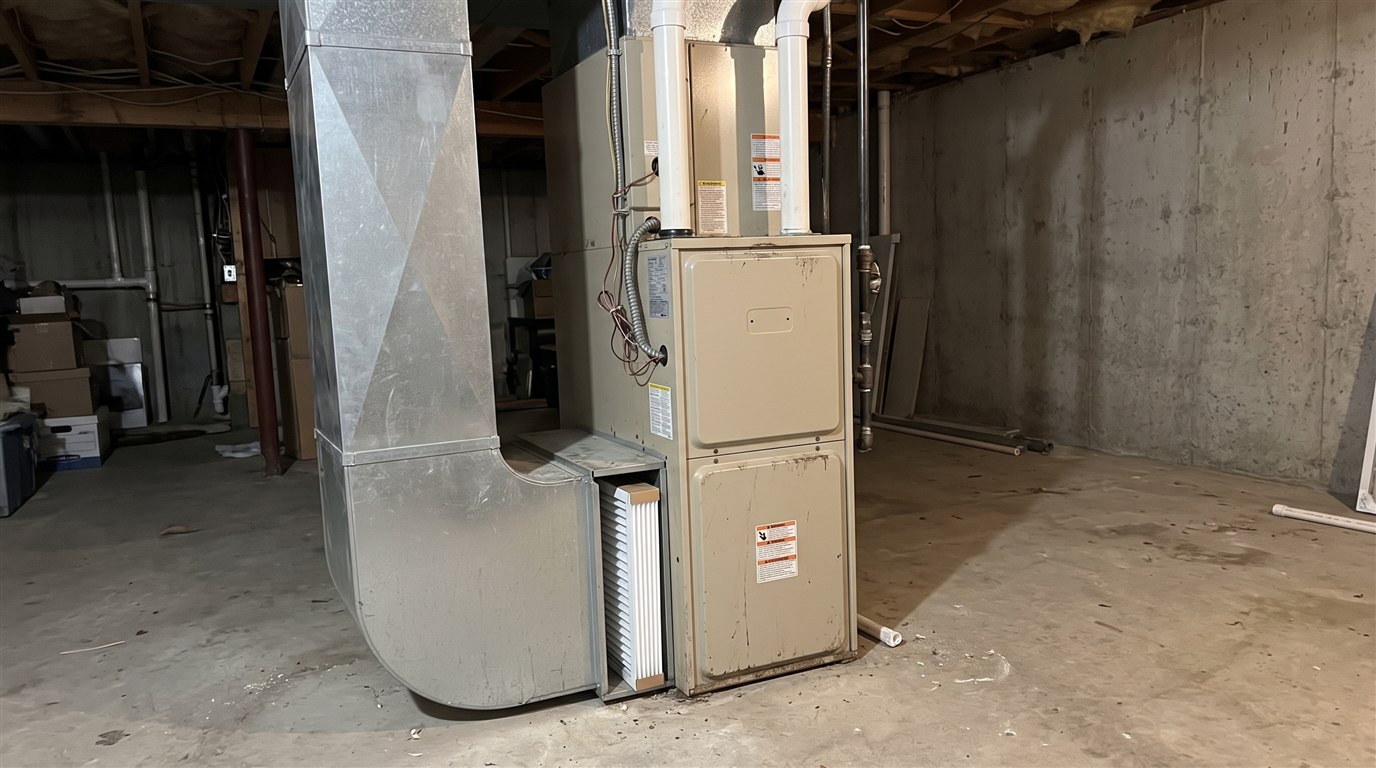
Change the furnace filter. Set the thermostat to off, slide the filter out and hold it up to a light. If light barely gets through, replace it. The size is printed on the frame, and the new one goes in with the airflow arrow pointing toward the furnace. A 1 inch MERV 8 filter (about $8 to $15) suits most homes. Check it monthly through the heating season. Step by step: how to change your furnace filter.
Close Up the Windows
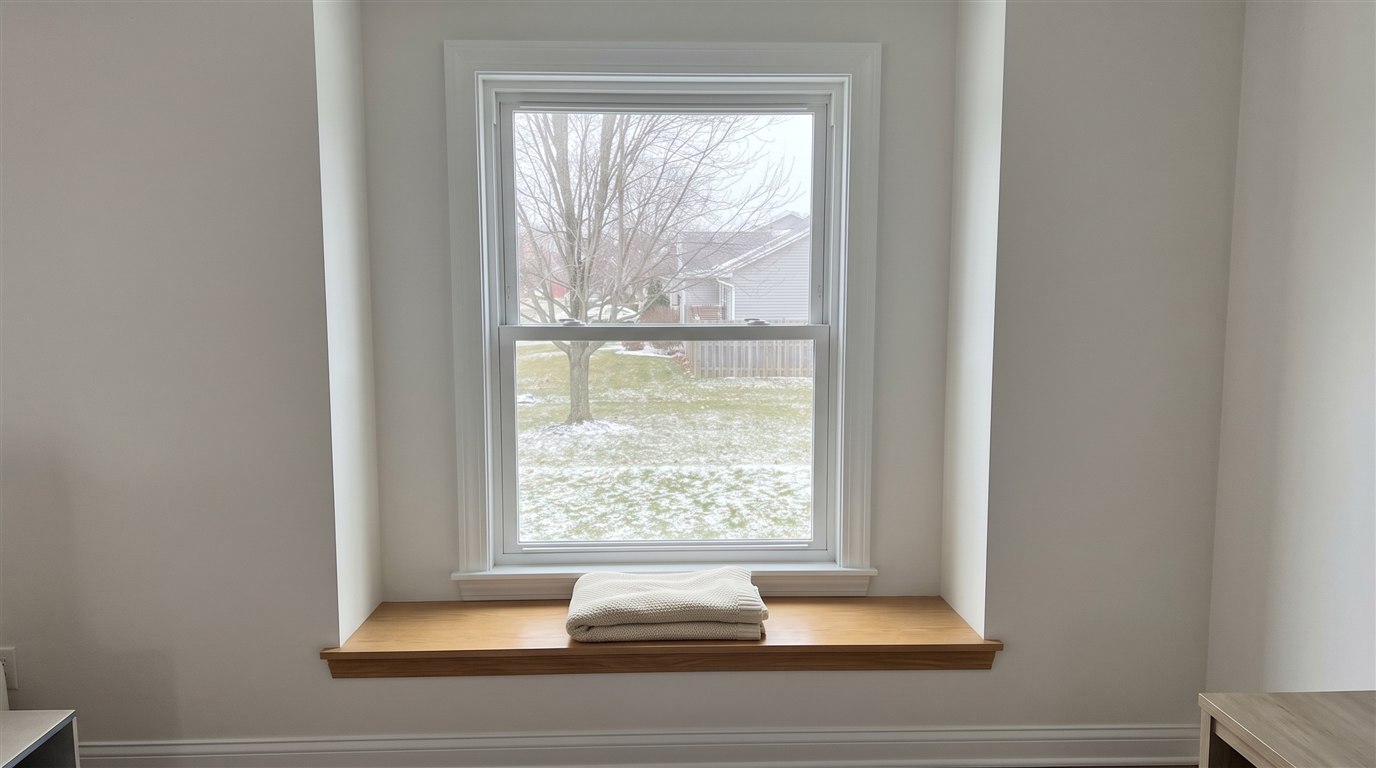
Storm windows to winter. A triple-track storm window has three panels in an aluminum frame over the outside of an older window: upper glass, lower glass and a screen. You work them from inside. Raise the main window's bottom sash, pinch the tabs at a panel's bottom corners and slide it until the tabs catch. For winter, the screen goes up out of the way and both glass panels close, the upper at the top and the lower at the sill. While you're there, vacuum the bottom track and clear the small weep holes in the storm frame with a pipe cleaner.
Read the condensation. Once it's cold, water on the glass tells you something. On the inside of the glass, the room is too humid: run the bath and kitchen fans and aim for about 30 to 50 percent humidity, toward the low end in a cold snap. Between the panes, the seal has failed; it won't wipe off, and the window still works but insulates less. On the outside in the morning, that's normal. Wipe the sill whenever water collects, because standing water peels paint and rots wood.
Feeling a draft at a door or sash is a different job with its own guide: how to weatherstrip doors and windows.
Get the Humidifier Ready
A humidifier sends whatever is in its tank into the room, so it gets cleaned before the first fill, not after the first cough. Unplug it. Cover the scale in the tank and base with white vinegar for 20 to 30 minutes, brush the crust loose, and rinse until the smell is gone. Replace the wick if it's stiff or discolored.
- Through the season: empty, rinse and air dry it daily, and do the vinegar clean every third day.
- Buy a hygrometer (about $10 to $15), the small gauge that reads indoor humidity, and keep the room between 30 and 50 percent. Above that, windows sweat and mold gets a start.
- White dust on the furniture from an ultrasonic model means it's time to switch to distilled water.
Bleach and Vinegar Never Meet
If the manual gives a disinfecting step with diluted bleach, rinse every trace of vinegar out first, then rinse again after.
Alarms and Heaters
Heating season is fire and carbon monoxide season, so this is the week for the safety round.
- New batteries in every smoke and CO alarm that takes them, then press the test button on each. Sealed 10 year alarms have no battery to change; read the date on the back, and replace any smoke alarm that is 10 years old.
- Space heaters get three feet from anything that burns: curtains, bedding, the couch. Plug one straight into a wall outlet, never an extension cord or a power strip, and turn it off when you leave the room or go to sleep.
- Candles get 12 inches and a steady holder, and they go out when you leave the room.
- Never heat the house with an oven or a gas stove.
The Outage Kit
Winter storms take the power. An hour now builds the kit that makes two dark days dull instead of hard. Put it all in one lidded bin in a closet you could find in the dark.
- Light: an LED flashlight or lantern for each person (about $15 to $30) and spare batteries. Not candles.
- Water: a gallon per person per day for at least three days. A household of four needs 12 gallons.
- Food: three days of food that needs no cooking, a manual can opener, and pet food if you have pets.
- News and power: a battery or hand-crank radio (about $25 to $40) and a charged power bank for each phone.
- A paper list of phone numbers: family, neighbors, the utility's outage line. A dead phone takes its contacts with it.
Generators Stay Outside
Never run a generator, a grill or a camp stove inside the house or in the garage, not even with the garage door up. Set a generator at least 20 feet from the house with the exhaust pointed away from doors, windows and vents.
The Entry
Winter comes in on shoes: grit, salt and meltwater. Two mats stop most of it. A coarse scraper mat outside knocks the grit off, and an absorbent one inside soaks up the water. Get each long enough for a couple of steps (about $20 to $50 each).
Put the snow shovel and the ice melt by the door before the first storm, not during it. On concrete poured within the past year, use sand, not ice melt. After each storm, clear the snow away from the dryer vent hood and from any furnace vent pipes on the outside wall. Buried, they can push exhaust back into the house.
The Inside List at a Glance
When to Call Someone
- Upstairs storm panels that need work from outside, or any panel that's stuck, cracked or off its track. A window cleaner charges about $30 to $40 a storm window.
- Fog between the panes that keeps spreading. A glass company can usually replace just the sealed glass unit (about $150 to $650 a window).
- A furnace filter behind a panel you'd have to unscrew. Ask the heating tech to show you at the next service.
Where the Full Instructions Are
Every job on this list is in Keeping House: The Everyday Handbook, with what you'll need, what it costs and where the job stops being yours to do. The book's Fall Reset page is this checklist with the bedding and closet swaps added, and it sits beside 170 other everyday jobs, room by room.