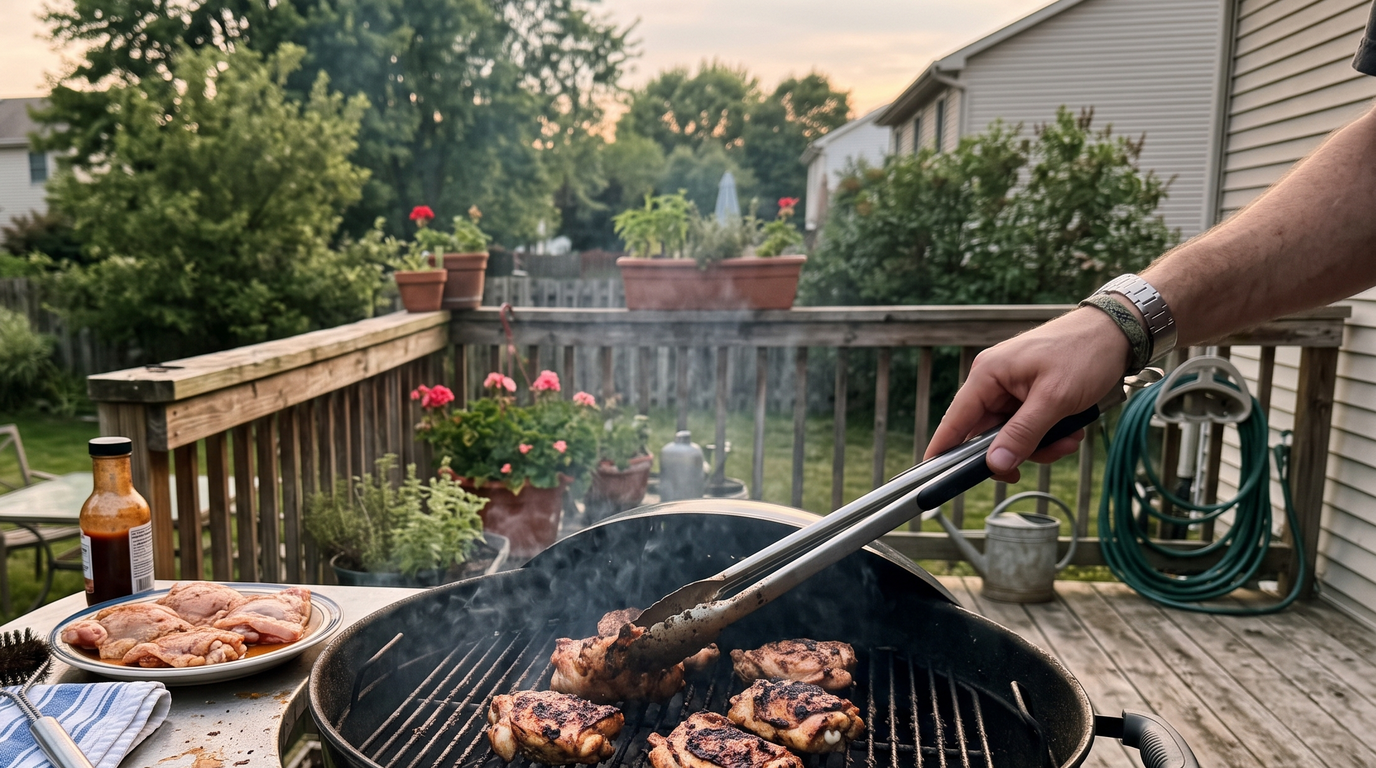
Every spring, somebody stands in a big-box aisle comparing two grills and asks the wrong question. Not "which one is better" — that one at least has answers. The wrong question is "which one would I want if I were the kind of person who spends Saturdays tending a fire."
That's how a $700 smoker ends up under a cover for three years while its owner grills burgers on the neighbor's propane. The best grill isn't the one that wins the taste test. It's the one you'll still be reaching for in October, on a weeknight, when it's getting dark at six and dinner needs to happen.
So this comparison is organized around how you already cook, not around which fuel a barbecue purist would defend. Four types, what each is genuinely good at, where each disappoints, and — the part almost nobody runs the numbers on — what it costs to keep feeding for five years.
The short version
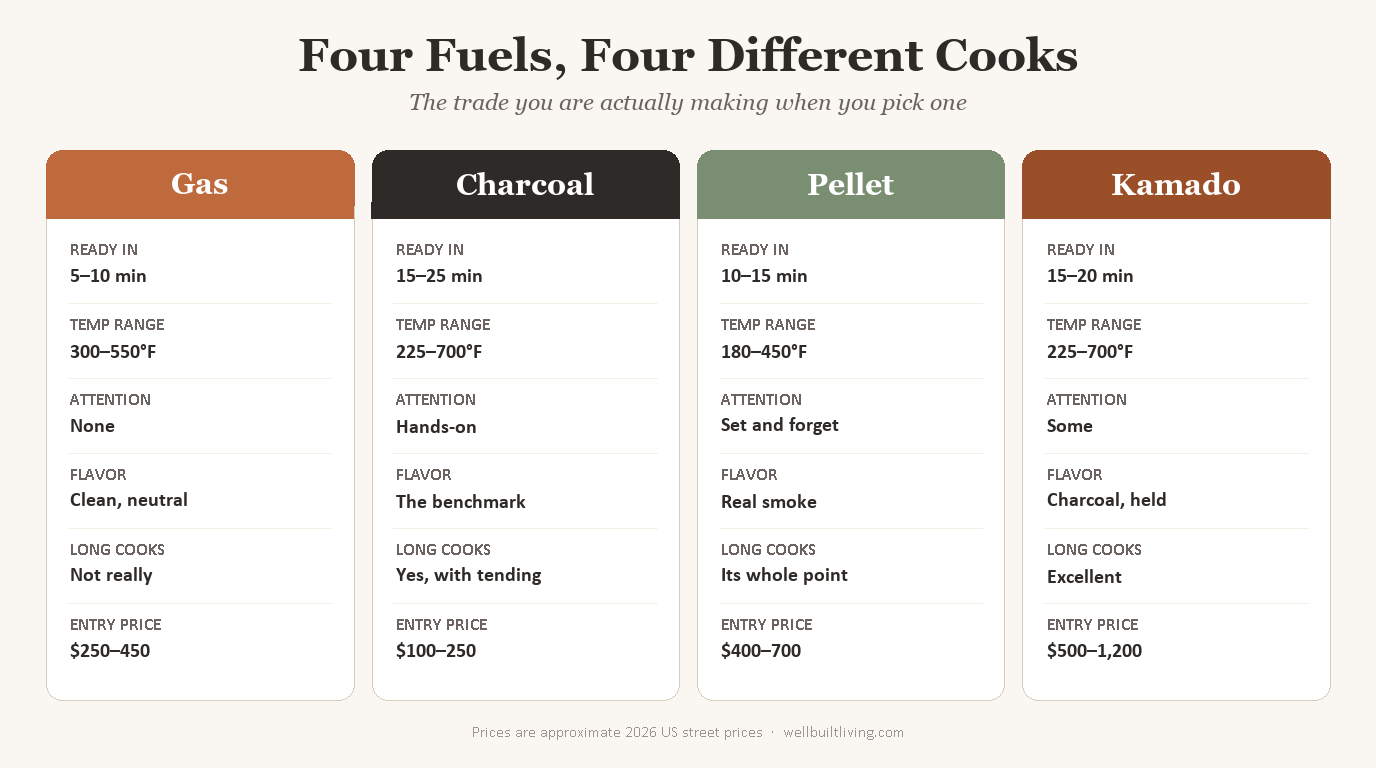
If you only read one thing, read the table. Every row is a real trade, not a marketing distinction.
Start with your Tuesday, not your Saturday
Two questions predict grill satisfaction better than any spec on the box.
How often do you actually cook outside? If the honest answer is a handful of times a summer, buy cheap and buy simple — a kettle or a modest three-burner. Spending $1,200 to use something eight times a year is how grills end up on the curb. If it's two or three times a week, the calculus flips completely: convenience compounds, and so does build quality, because you're going to put a decade of heat cycles through it.
How much fussing will you tolerate on a weeknight? This is the one people lie to themselves about. Lighting a chimney of charcoal is genuinely pleasant at 4pm on a Saturday and genuinely annoying at 6:45pm on a Wednesday with a hungry kid orbiting your legs. There's no wrong answer — but answer it honestly, because it decides more than flavor does.
A useful reality check
Think about the last ten times you cooked outside. Not the ten you imagined — the ten that happened. What were they? If eight were weeknight chicken and vegetables, you're buying a weeknight grill, whatever your ambitions say.
Gas: the grill that actually gets used
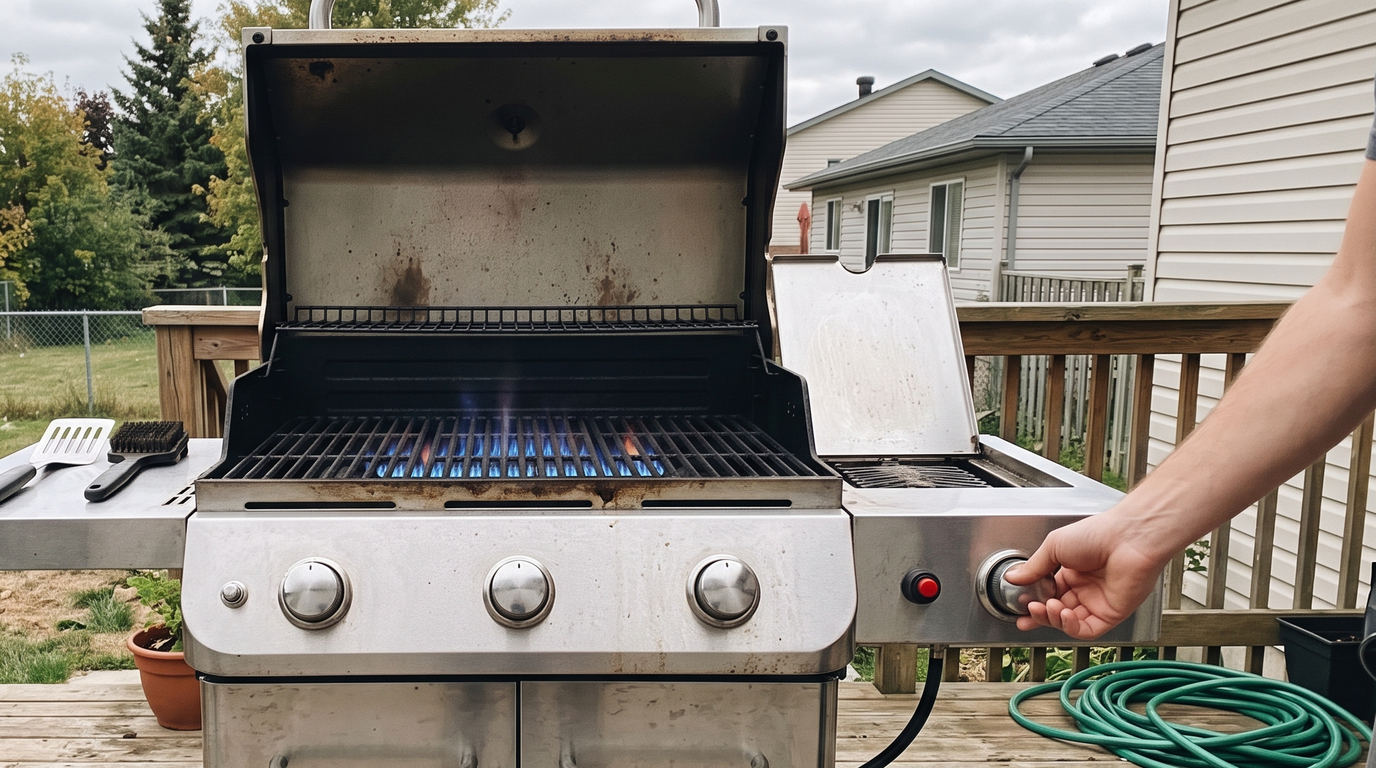
Gas wins on the metric nobody puts on a spec sheet: how often the thing gets fired up. Five to ten minutes from cold to cooking, no ash, no waiting, and it shuts off when you're done. That convenience is why gas grills outsell everything else, and it's a legitimate reason to buy one — a grill used twice a week beats a better grill used twice a summer.
What you give up is flavor. Not "a little" — a gas grill produces clean, neutral heat, and that's the whole story. The smoker boxes bolted onto mid-range models make smoke, but smoke is not the same as barbecue; you get an aroma, not a smoke ring. If somebody tells you their gas grill tastes like charcoal, they've either modified it heavily or haven't had good charcoal lately.
Gas also struggles at the low end. Most run happily from 300°F up, but true low-and-slow at 225°F for eight hours isn't what they're built for, and holding it takes fiddling with one burner and a lot of luck.
- Buy it if: you cook on weeknights, you're feeding a crowd on short notice, or convenience is the thing most likely to keep you cooking outside
- Skip it if: flavor is the point, or your dream cook is a twelve-hour brisket
- Look for: heavy cast-iron or thick stainless grates, individually lit burners, and a firebox warranty of ten years or better
- Ignore: the headline BTU number in isolation — see the spec section below
Charcoal: the flavor benchmark, and the cheapest way in
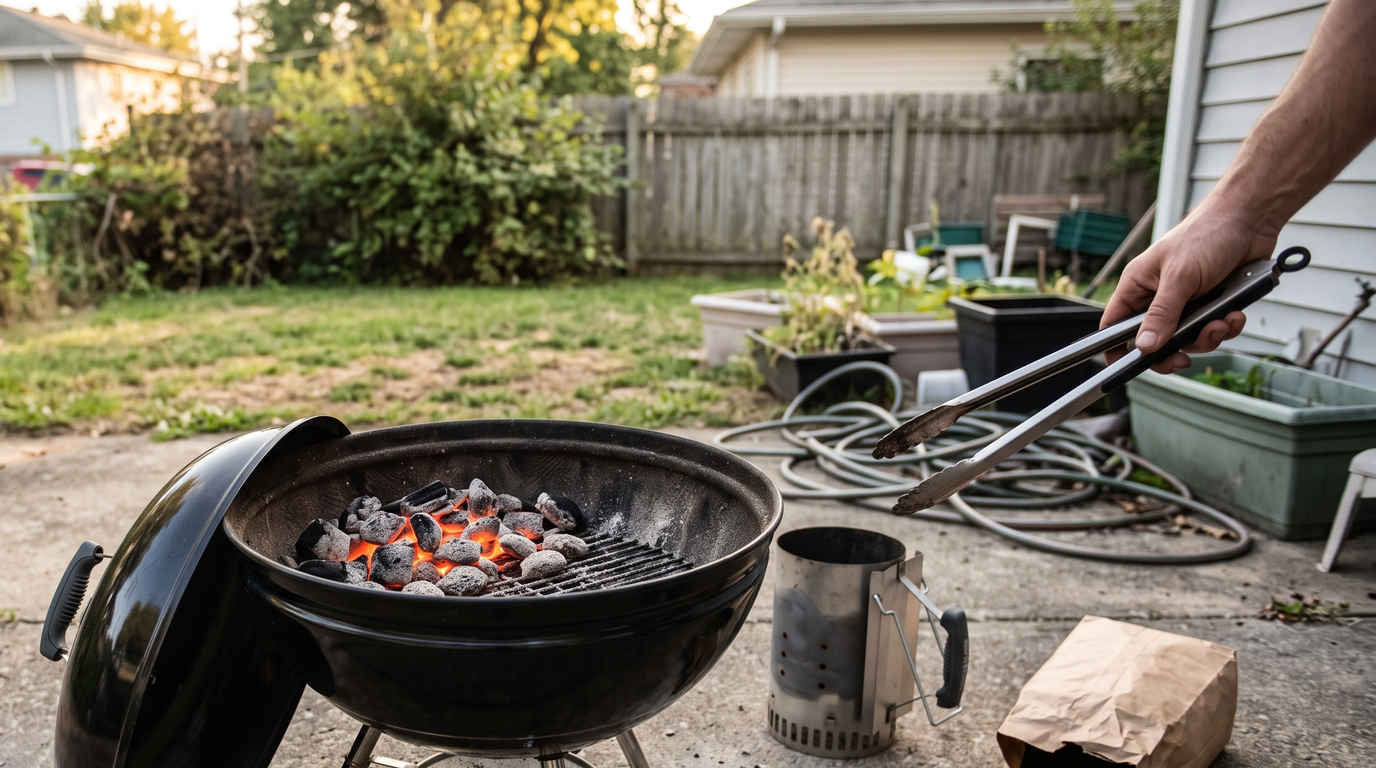
Charcoal is the flavor every other fuel gets compared to, and a good kettle is the best value in outdoor cooking full stop. A 22-inch kettle costs less than a mediocre gas grill, has almost nothing to break, and will comfortably outlive the propane grill bought the same year. It sears harder than gas, it does low-and-slow if you set the coals up properly, and it costs a couple of hundred dollars.
The trade is time and attention. Fifteen to twenty-five minutes from match to cooking, temperature managed by moving air and coals rather than turning a dial, and ash to deal with when you're finished. None of that is difficult — it's just not instant, and on a Wednesday that matters.
Buy this with it
A chimney starter, about $20, is the single best accessory in grilling. Newspaper in the bottom, coals on top, fifteen minutes, done — and you never buy lighter fluid again, which also means your food stops tasting faintly of a gas pump.
- Buy it if: you like the process, you want the best flavor per dollar, or your budget is under $300
- Skip it if: you need dinner started in five minutes on a weeknight
- Look for: a thick porcelain-enamel bowl and lid, a real ash catcher, hinged grates for adding coals mid-cook, and dampers that hold their setting
- Ignore: thin painted-steel barrel grills at the bottom of the price range — they rust through in a couple of seasons
Pellet: set a temperature and walk away
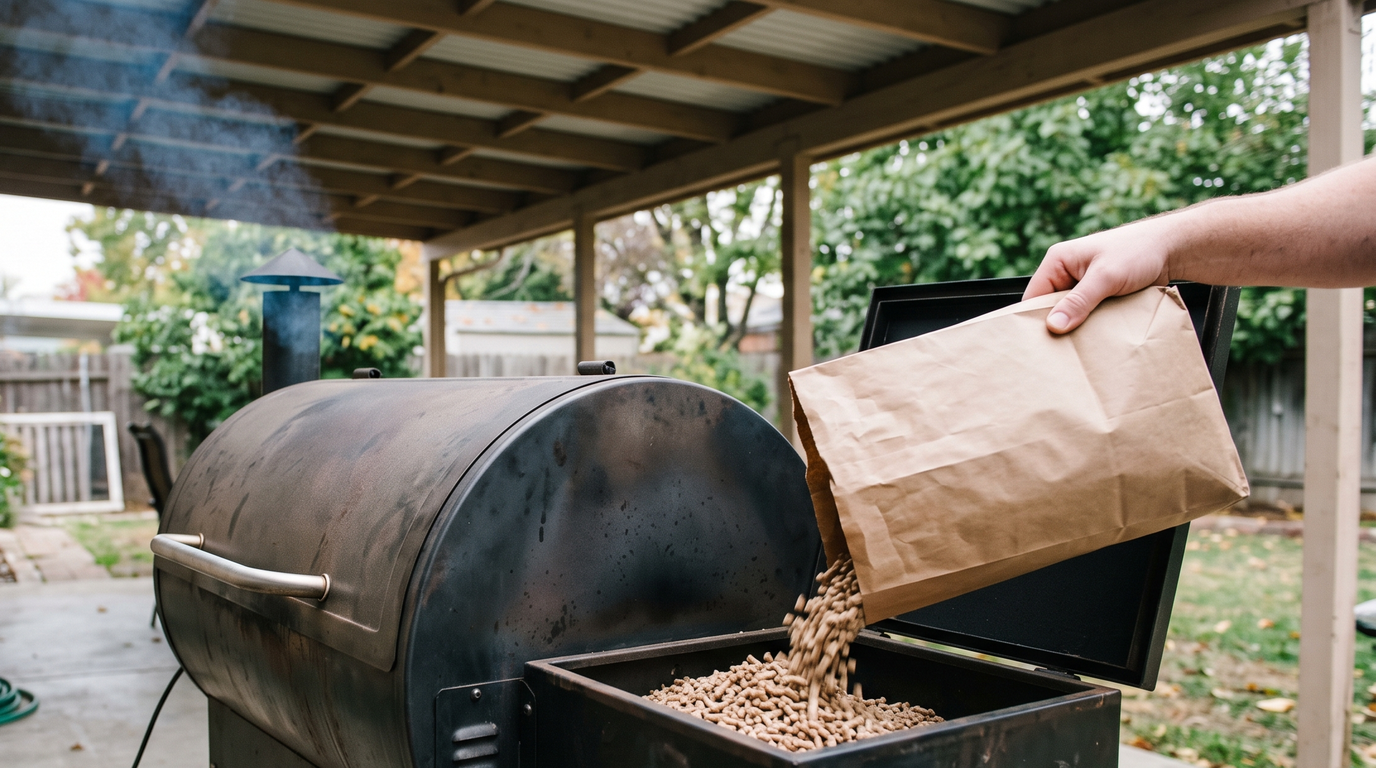
A pellet grill is a thermostat with a fire attached. An auger feeds hardwood pellets into a burn pot, a controller keeps the temperature where you set it, and you get real wood smoke without tending anything. Dial 250°F, put on a pork shoulder, come back in eight hours. For anyone who wants barbecue rather than grilling, it's the shortest path from wanting it to eating it.
Two honest limitations. First, searing: many pellet grills top out around 450°F, which is fine for chicken and ribs and disappointing for steak. Models with a dedicated sear zone exist and cost more. Second, it needs an outlet — this is a grill with electronics, which rules out campsites and makes covered storage important, because damp pellets swell and jam the auger.
- Buy it if: long cooks are the goal and you'd rather not manage a fire for eight hours
- Skip it if: your budget is under $300, you mostly cook steak, or there's no power where the grill lives
- Look for: a stated temperature swing near ±15°F, a top setting above 450°F if you want steaks, a pellet dump chute, and hopper capacity matched to your longest cook
- Ignore: vague "precision temperature control" claims with no number attached — that usually means ±25°F or worse
Kamado: the one that does everything, if you never move it
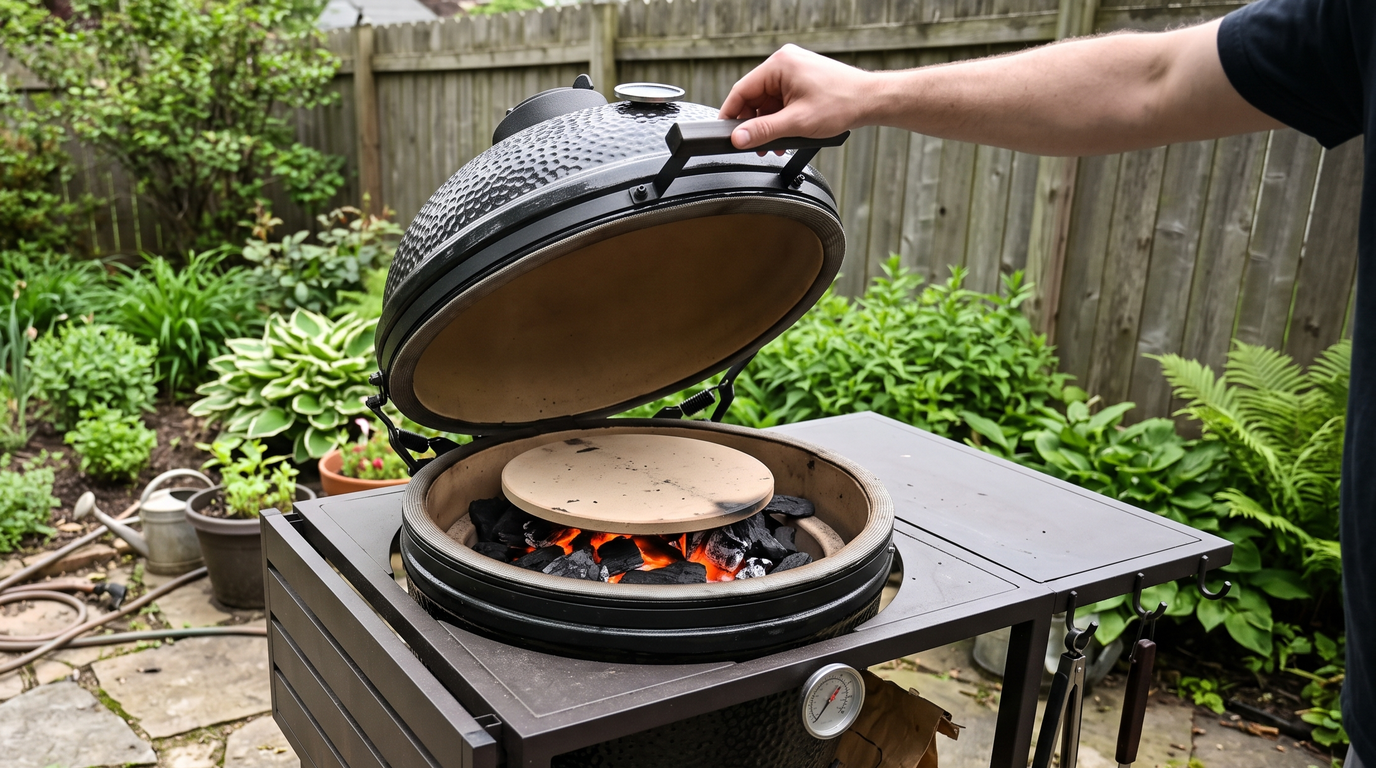
The thick ceramic walls of a kamado hold heat so well that the weather stops mattering, which is why kamado owners are the ones still cooking in January. It'll run 700°F for steak and pizza, settle at 225°F for fourteen hours without much help, and use noticeably less charcoal than a kettle doing the same work.
Two things surprise buyers. It is genuinely immovable — a large ceramic model runs to 200 pounds and the nest is often sold separately. And the cooking surface is smaller than the footprint suggests: a "large" kamado gives you roughly 250 to 400 square inches, so a crowd means cooking in batches.
- Buy it if: you want range from one cooker, you cook year-round, and it has a permanent home
- Skip it if: it needs to travel, or you regularly feed eight or more at once
- Look for: a lifetime or near-lifetime ceramic warranty, an included heat deflector, a good gasket, and honest cooking-area numbers
- Budget for: the nest or cart, which usually isn't included and isn't optional
What each fuel can actually reach
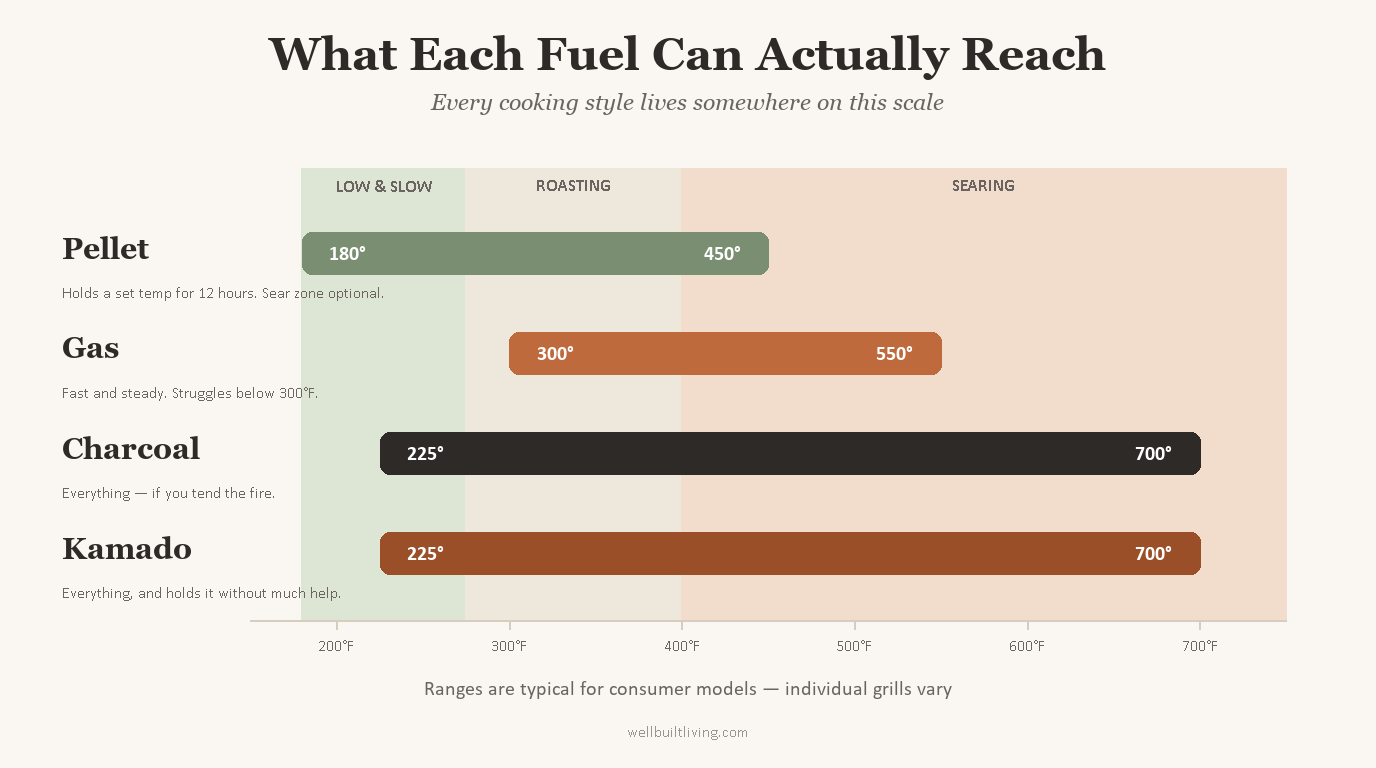
Most disappointment traces back to this chart. Someone buys a pellet grill and discovers their steaks come out gray. Someone buys a three-burner gas grill and can't hold 225°F for ribs. Neither grill is defective — they're being asked to work outside their range.
Match the fuel to the cooking you'll actually do most. If that's searing, you want charcoal, kamado, or a gas grill with a proper sear burner. If it's long smoke sessions, you want pellet or kamado. If it's genuinely both, kamado is the one cooker that covers the whole scale — which is exactly what you're paying for.
The two specs worth checking
Grill spec sheets are mostly noise. Two numbers survive contact with reality.
Primary cooking area. The retail standard is about 72 square inches per person you regularly feed, and closer to 100 if you want room to run a hot zone and a cool zone instead of packing the grate edge to edge. For a family of four that's roughly 290 to 400 square inches. Anything past about 800 square inches is built-in and commercial territory — if you're feeding a dozen people, most hosts cook in two waves rather than buying a restaurant grill.
The number they hope you'll use
Almost every manufacturer advertises a "total cooking area" that quietly includes the warming rack. You cannot cook a steak on a warming rack. Find the primary grate number — it's the one that constrains what you can actually make — and compare on that.
BTU per square inch, for gas only. Total BTU is meaningless without knowing what area it's heating. Industry guidance lands around 75 to 100 BTU per square inch of primary grate. Below that, a grill struggles to recover heat when you put cold food on it. Far above it usually means a manufacturer chasing a spec-sheet headline with burners that will drain a propane tank in a hurry. Divide the BTU number by the primary cooking area and see where it falls.
What it costs once you're feeding it
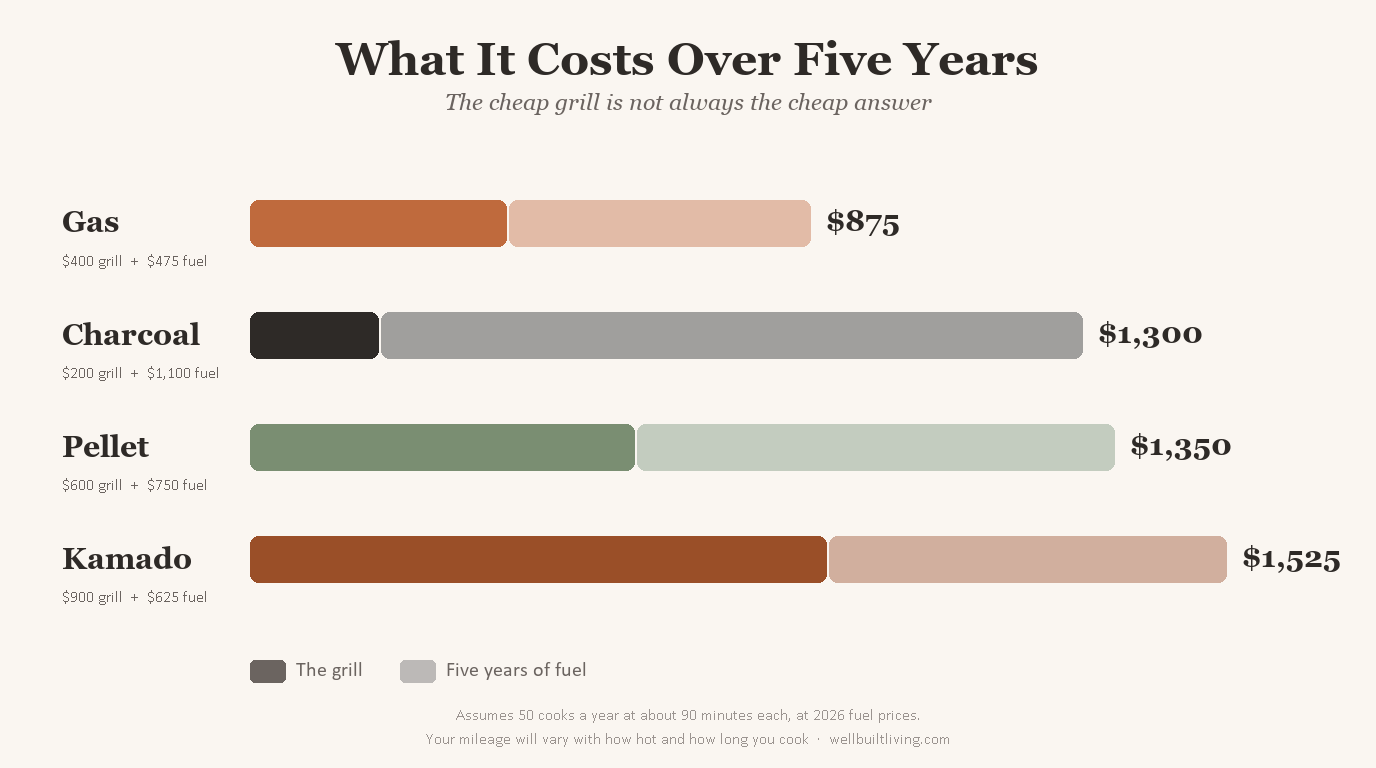
Here's the part that changes minds. The purchase price is only the entry fee — every one of these grills has an appetite, and over five years the fuel bill can outrun the grill itself.
Run the numbers on fifty cooks a year at about ninety minutes each. A 20-pound propane tank runs roughly twenty hours and costs about $25 to refill, so gas comes in near $95 a year. Charcoal is the expensive one: three or four pounds a cook, at around $20 for a 16-pound bag, is roughly $220 a year — meaning the cheapest grill to buy is the priciest to feed. Pellets land in between at about $150 a year, and a kamado burns roughly half the charcoal a kettle does for the same cook, so it's nearer $125.
Add it up and the ranking inverts. The $200 kettle costs about $1,300 over five years. The $400 gas grill costs about $875 — the cheapest of the four to own, despite not being the cheapest to buy. That's not an argument for gas so much as an argument for doing this arithmetic before you decide the kettle is the budget option.
Those are assumptions, not laws — cook hotter, longer, or more often and every number moves. But the shape holds: fuel is a real line item, and it doesn't show up on the price tag.
Where the money gets wasted
- Headline BTU numbers with no cooking area attached. The ratio is the spec; the raw number is marketing.
- "Total cooking area" that includes the warming rack — sometimes a third of the advertised figure.
- Smoker boxes on cheap gas grills. They make smoke. Smoke is not barbecue.
- Side burners. Ask yourself which dish you'll cook on one. Most people never answer that question twice.
- Rotisserie kits on entry-level grills. The motors are reliably the first thing to fail.
- Buying for the party you host twice a year instead of the dinner you cook fifty times.
So which one?
If you cook on weeknights and want dinner rather than a project, buy gas, and spend your money on grate quality and burner warranty rather than burner count. If you like the fire and want the best flavor per dollar, buy a 22-inch kettle and a chimney starter and you'll be ahead of most people spending four times as much. If what you actually want is barbecue — the long, smoky, patient kind — buy a pellet grill and stop pretending you'll tend a fire for eight hours. And if you want a single cooker that spans the whole temperature range and you have somewhere permanent to put it, a kamado is the one that genuinely does everything.
If you're still between two of them, our grill picker asks six questions about how you actually cook and gives you a straight answer, plus the cooking area and BTU range to shop for at your crowd size.
Whatever you buy, this is what kills it
Grills rarely die of old age. They die of neglect, and the failure modes are boring and preventable.
- Buy the cover. Weather is what turns a ten-year grill into a four-year grill, and covers cost $30.
- Clean the grease. A full drip tray is the leading cause of grill fires, and it's a two-minute job.
- Store propane outdoors, upright, never in the garage. Tanks vent when they warm up, and vapour pools at floor level.
- Keep pellets dry. Damp pellets swell, jam the auger, and turn a $700 grill into a repair project.
- Empty the ash. Wet ash holds moisture against steel, which is how kettle bottoms rust out.
Five minutes after each cook and a cover between them is genuinely the whole maintenance routine — and once you own one, our gas grill cleaning and maintenance guide lays the whole thing out by frequency. Our summer maintenance checklist folds the grill in with everything else the season asks for.
The grill worth buying is the one that matches the cooking you'll really do. Be honest about that and any of these four will serve you well for a decade. Be aspirational about it and you'll own something excellent that you resent every time it's dinnertime and you're already tired.