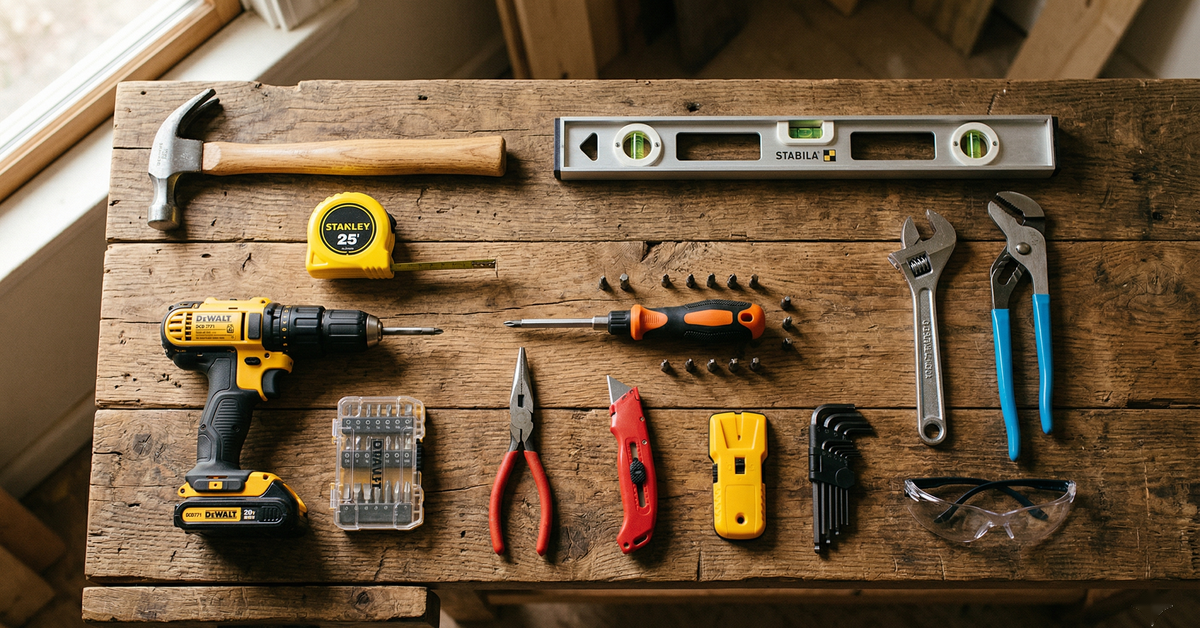
When I bought my first house, I did what every new homeowner does: I walked into a big-box hardware store and felt immediately overwhelmed. Aisles of tools, every one of them apparently essential according to some blog post or YouTube video, and a price tag on the "starter kit" that was higher than a month of groceries. I came home with an expensive basic set, used about four things in it, and realized most of the rest just gathered dust.
After years of maintaining two homes and helping friends with theirs, I can tell you with full confidence: you do not need a garage full of tools. You need fifteen good ones. These fifteen will handle about ninety percent of every home maintenance task, small repair, hanging project, and DIY upgrade you'll ever need to do. Everything beyond this list is either a specialty tool you rent when you need it, or a nice-to-have you can add slowly over time.
The Core Fifteen
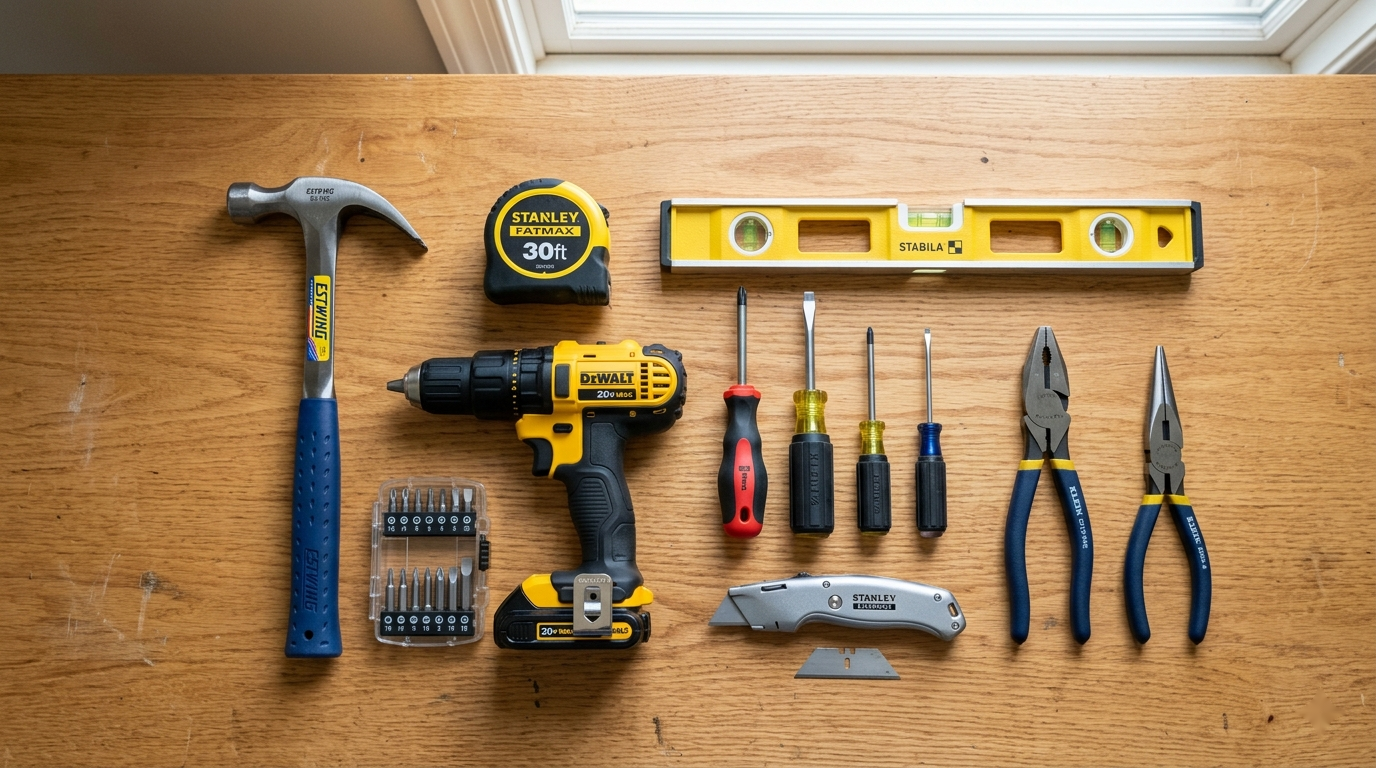
1. A 16-oz Claw Hammer
Not a heavier framing hammer, not a tiny tack hammer — a basic 16-ounce claw hammer with a comfortable fiberglass or wood handle. You'll use it for hanging pictures, pulling nails, tapping trim into place, and about a dozen other small jobs. Spend fifteen to twenty-five dollars on a decent one. A cheap hammer feels awful and is genuinely dangerous because the head can loosen.
2. A 25-Foot Tape Measure
Get one with a metal blade that's at least an inch wide — that width matters because it means the tape will stand out unsupported when you're measuring across a room. Twenty-five feet is the sweet spot: long enough for any room measurement, short enough to be manageable. I like ones with a belt clip and a magnetic tip. Stanley, Milwaukee, and Komelon all make good ones in the fifteen-to-twenty-five dollar range.
3. A Cordless Drill / Driver
If I could only recommend one power tool to a new homeowner, this would be it. A 12V or 18V cordless drill handles hanging heavy shelves, assembling furniture, driving screws into decks, drilling pilot holes, and a hundred other tasks. You don't need a monster 20V with two batteries unless you're building decks regularly. A basic kit with one battery, a charger, and a small bit set is all you need. Expect to spend sixty to a hundred and twenty dollars for something decent.
4. A Basic Drill Bit and Driver Bit Set
The drill is useless without bits. Get a combo set that includes twist bits (for drilling into wood and metal), masonry bits (for concrete and brick), and a range of Phillips, flathead, square, and Torx driver bits. A twenty-five-piece set for about twenty dollars covers almost everything.
5. A Screwdriver Set (Multi-Bit or 6-Piece)
Even with a drill, you need manual screwdrivers for delicate work, tight spaces, and situations where the drill is overkill. A multi-bit screwdriver (like the classic Megapro 15-in-1) is the most space-efficient option. Or get a basic six-piece set with two sizes of Phillips and flathead plus two precision drivers for electronics and eyeglasses.
6. A 4-Foot Level (Plus a Small Torpedo Level)
One of the most useful tools you'll own once you have it. The four-footer handles hanging shelves, pictures, curtain rods, and checking that your washing machine isn't tilted. The small torpedo level fits in tight spaces and is great for leveling appliances and small trim work. Skip the laser level until you know you need one.
7. An Adjustable Wrench (8-Inch and 10-Inch)
An adjustable wrench handles almost every plumbing repair, appliance hookup, and hardware task. Get a decent one — the jaws on cheap ones slip and round off nuts, which is infuriating. An eight-inch handles smaller work like faucet repairs; a ten-inch handles larger pipe fittings and outdoor work.
8. Needle-Nose and Tongue-and-Groove Pliers
Two pliers cover every plier task you'll ever face. Needle-nose pliers are for gripping small parts, pulling staples, bending wire, and reaching into tight spaces. Tongue-and-groove pliers (often called Channellocks, the brand name) are for plumbing, gripping pipes, and any task that needs serious clamping force.
9. A Utility Knife with Retractable Blade
You will use this constantly. Opening boxes, scoring drywall, trimming caulk, cutting carpet, sharpening pencils in an emergency. Get one with quick-change blades and keep a pack of spares nearby. Dull blades are dangerous because you push harder and lose control. When in doubt, snap or swap.
10. A Stud Finder
A twenty-dollar magnetic or electronic stud finder saves you from the most common beginner mistake: drilling into drywall hoping there's a stud there. Mounting anything heavier than a small frame into drywall without a stud (or without proper anchors) ends badly. The entry-level Franklin Sensors ProSensor is a favorite because it shows you the full stud width, not just an edge.
Pro Tip
Outlets and light switches are mounted to studs. When a stud finder is giving you trouble, look for the nearest outlet or switch — the stud is almost always on one side of it. Knock gently along the wall and you'll usually feel the difference between the hollow bays and the solid stud.
11. A Hex Key (Allen Wrench) Set
Half the furniture you buy, every bike, most appliance panels, and a surprising amount of plumbing hardware uses hex fasteners. A folding set (both SAE and metric) costs about ten dollars and lives in your toolbox forever. Worth every penny.
12. A Putty Knife and Small Drywall Patch Kit
You will put holes in your walls. It is inevitable — a doorknob slams, a picture gets moved, a nail comes out. A three-inch flexible putty knife and a small drywall patch kit (with mesh patches, joint compound, and sanding block) lets you fix any small hole in under an hour. This is one of the most satisfying repairs you'll ever do.
13. A Decent Flashlight or Headlamp
Phone flashlights are fine for finding your keys. For real work — under sinks, in attics, in basements, in the electrical panel — you need a proper flashlight. A rechargeable LED flashlight or, even better, a headlamp that leaves both hands free is worth its weight in gold. I prefer headlamps for any work under a sink or in a cabinet.
14. Safety Glasses, Gloves, and a Dust Mask
Yes, three things, but they go together. A pair of safety glasses (ten dollars), a pair of leather work gloves for demo and yard work, a pair of nitrile gloves for painting and chemical work, and a box of N95 dust masks. Eye injuries and respiratory irritation are the most common DIY injuries and also the easiest to prevent. Put them on every single time. No exceptions.
15. A Sturdy Step Stool or Short Stepladder
A two- or three-step folding step stool covers changing light bulbs, reaching high shelves, and most ceiling-level work. If you have high ceilings or need to reach gutters, upgrade to a six-foot fiberglass stepladder. Don't stand on chairs. I've watched a friend break an ankle doing that and it turned a ten-minute job into a six-week recovery.
Storage: Don't Skip This Part
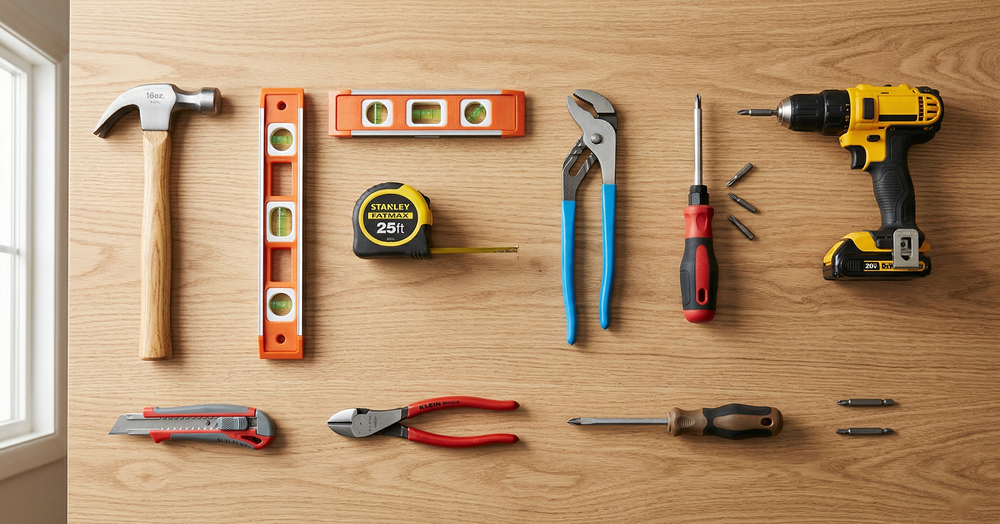
A good tool kit you can't find is useless. Get a basic toolbox or a small tool tote for the fifteen items above, plus a small parts organizer (a plastic case with compartments) for screws, nails, anchors, and picture hangers. When everything lives in one place, you actually use it. When your tools are scattered across three drawers and a garage shelf, you'll end up buying duplicates or just not doing the job.
If you have wall space in a garage or basement, a pegboard with hooks is one of the best investments you can make. It turns tool storage into tool display and cuts the time to grab a tool from minutes to seconds.
What to Skip (For Now)
Hardware store marketing will try to sell you on a lot of "must have" tools you will rarely, if ever, use as a typical homeowner. Here's what I'd hold off on until you have a specific project that needs it:
- A miter saw. Amazing tool, but unless you're doing trim work or furniture building, you'll use it twice a year. Rent it or borrow it.
- A circular saw. Same reasoning. If you're buying plywood and building things, yes. Otherwise, no.
- An orbital sander. Useful for refinishing, otherwise a sanding block is fine.
- An oscillating multi-tool. Very useful for certain niche jobs but easy to live without until you hit one of those jobs.
- A full socket set. Adjustable wrenches and Allen keys cover most homeowner tasks. Skip the big socket kits until you're working on cars.
- A shop vac. Genuinely useful, but add it when you have a specific reason (finished basement flood, construction project) rather than upfront.
Pro Tip
Most hardware stores and many public libraries now have tool lending programs or rentals. Before buying that $200 specialty tool for a one-weekend project, check if you can rent it for $15 or borrow it free. This is especially true for tile saws, power washers, floor sanders, and wet/dry vacs.
When to Buy Cheap vs. When to Spend More
A lot of people ask whether to buy premium tools or budget ones. Here's my honest answer after years of doing both:
Spend more on: anything with a cutting edge (utility knives, saws, drill bits), anything under load (adjustable wrenches, pliers, hammers), your cordless drill, and your level. These are the tools where cheap quality shows up immediately as frustration or injury.
Buy budget on: tape measures, screwdriver sets, hex key sets, putty knives, safety glasses, and basic accessories. The cheapest version at your hardware store will work just fine for years.
When in doubt, buy the mid-tier version. The difference between a five-dollar tool and a fifteen-dollar tool is usually enormous. The difference between a fifteen-dollar tool and a fifty-dollar tool is usually small enough that you won't notice it until you're using the tool professionally.
Add Tools as You Need Them
Here's the real secret: let your tool collection grow naturally. Every time you run into a project where you genuinely need something new, add it. That way, every tool in your collection has a story and a purpose, and your garage doesn't turn into a graveyard of hardware store impulse buys.
Start with these fifteen. Tackle a few small projects like caulking the bathtub, hanging a shelf, or fixing a running toilet. You'll build confidence and skill faster with a small, quality kit than with a giant collection you don't know how to use. And when you do hit that first project that requires something beyond this list, you'll know exactly what to buy — and why.